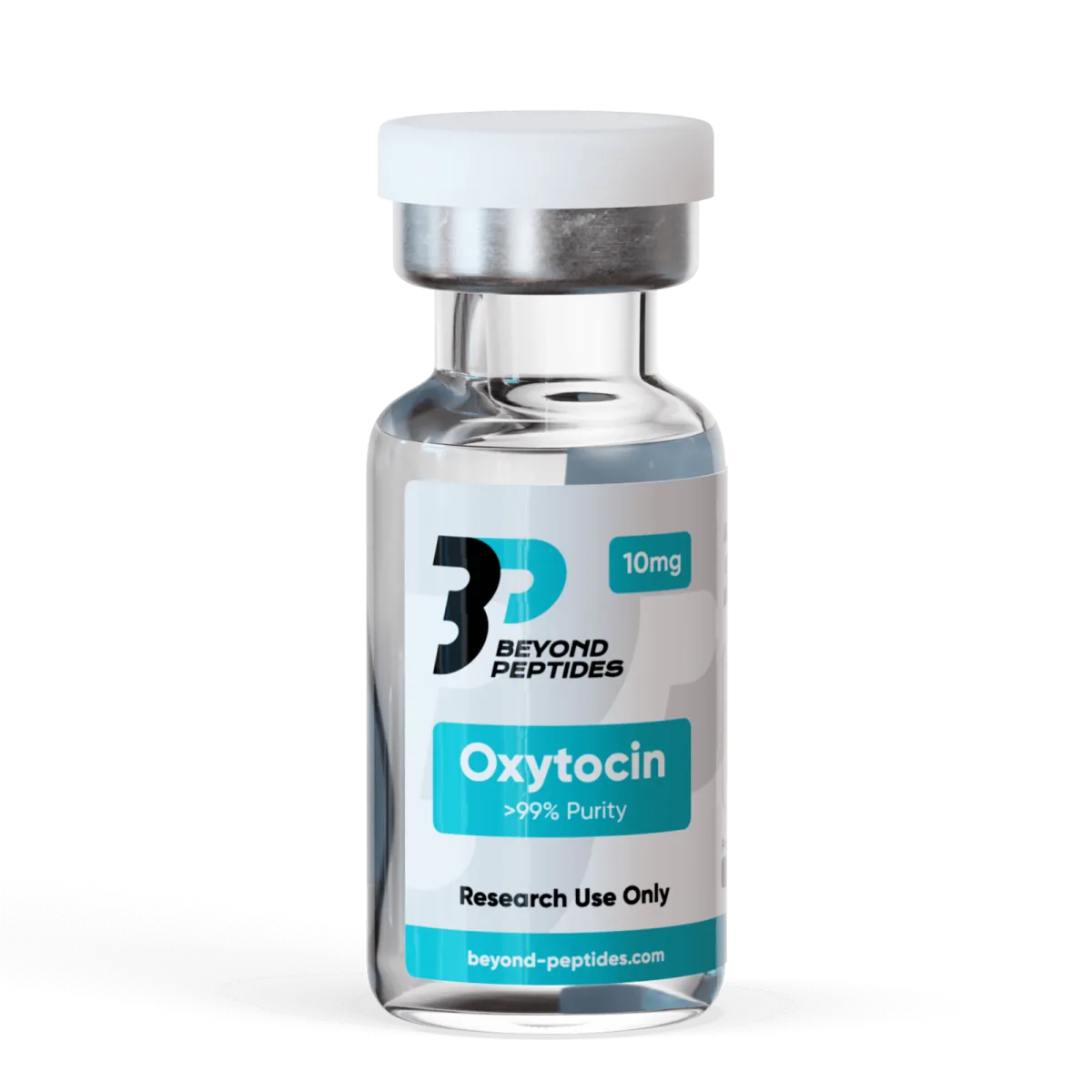
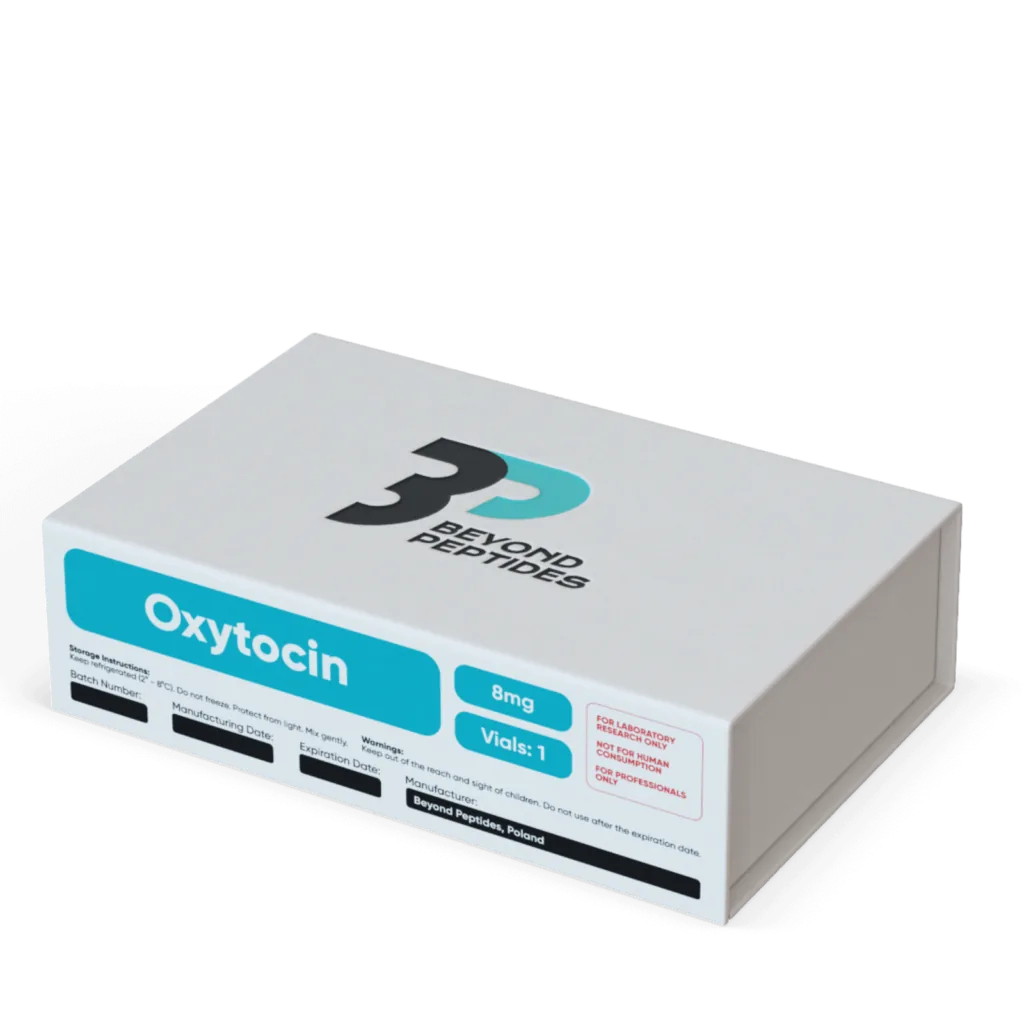
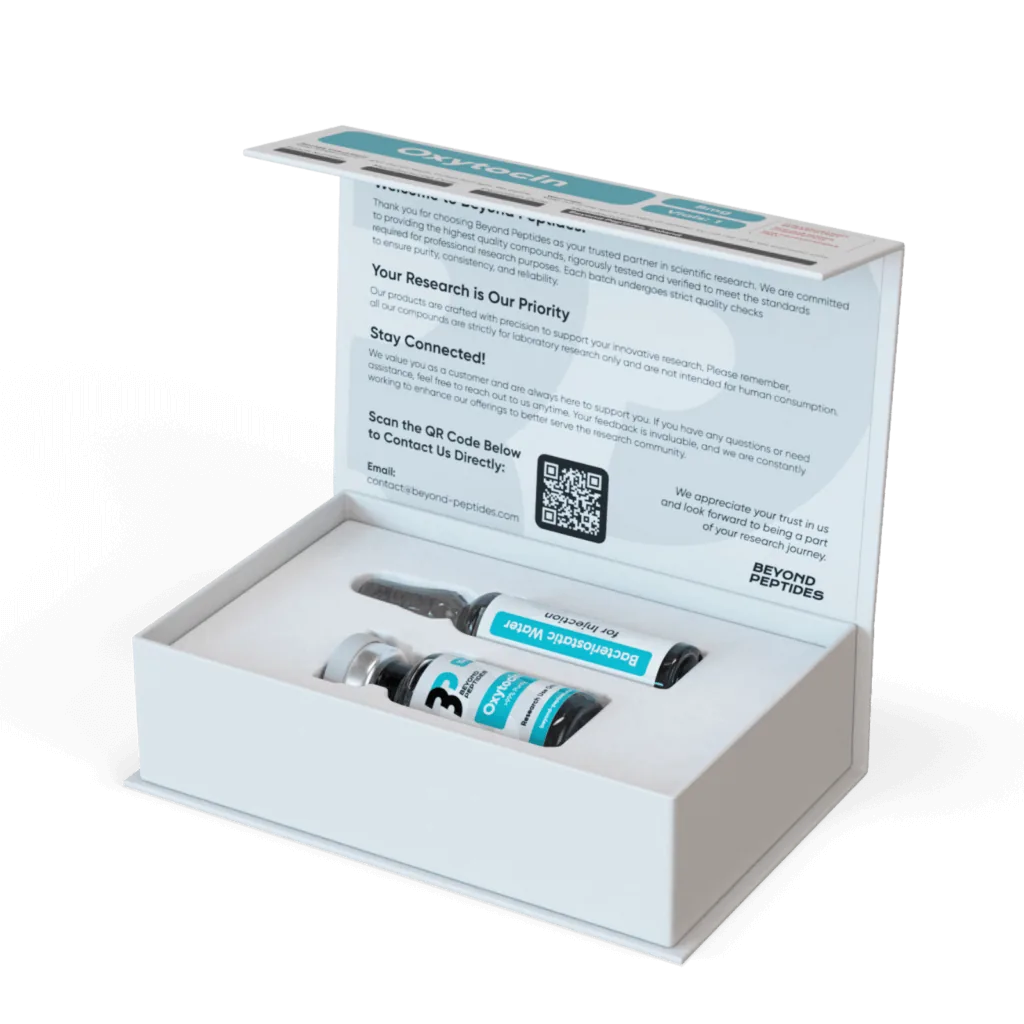

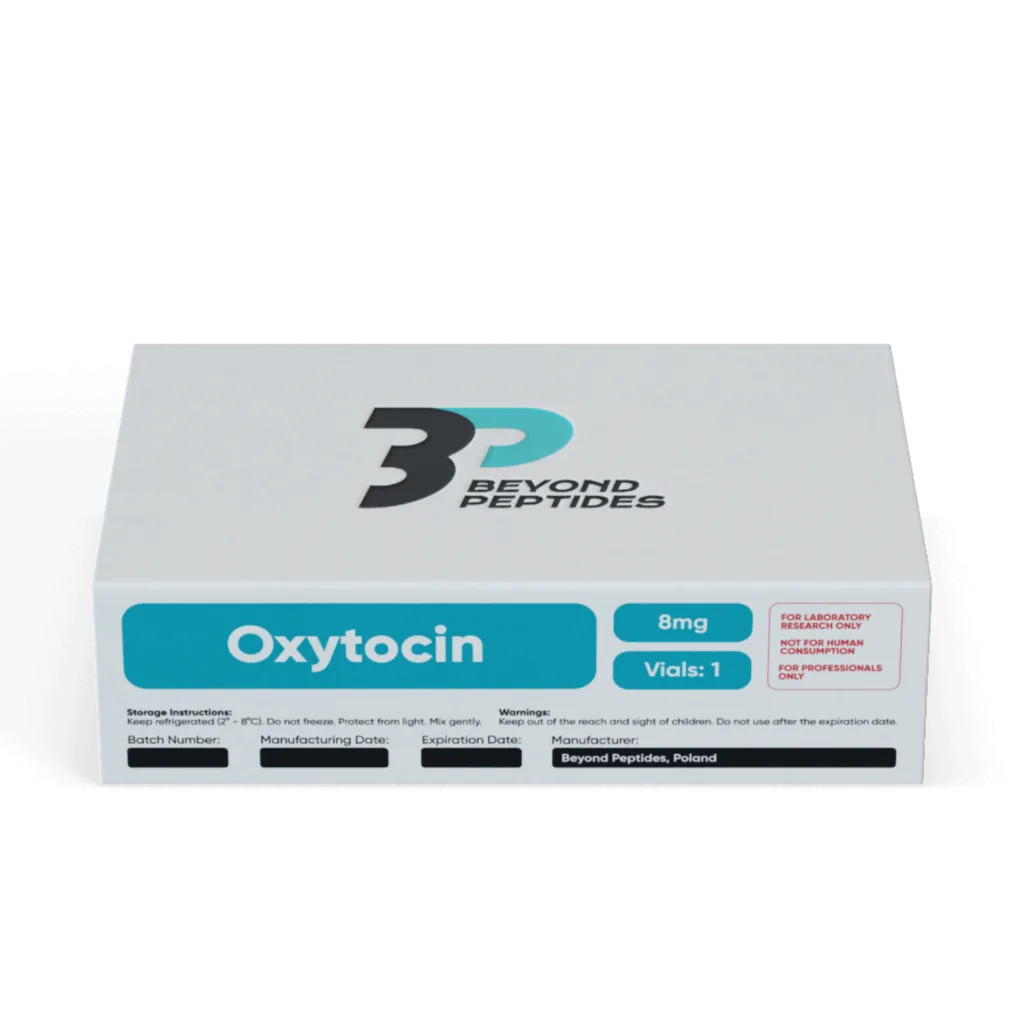
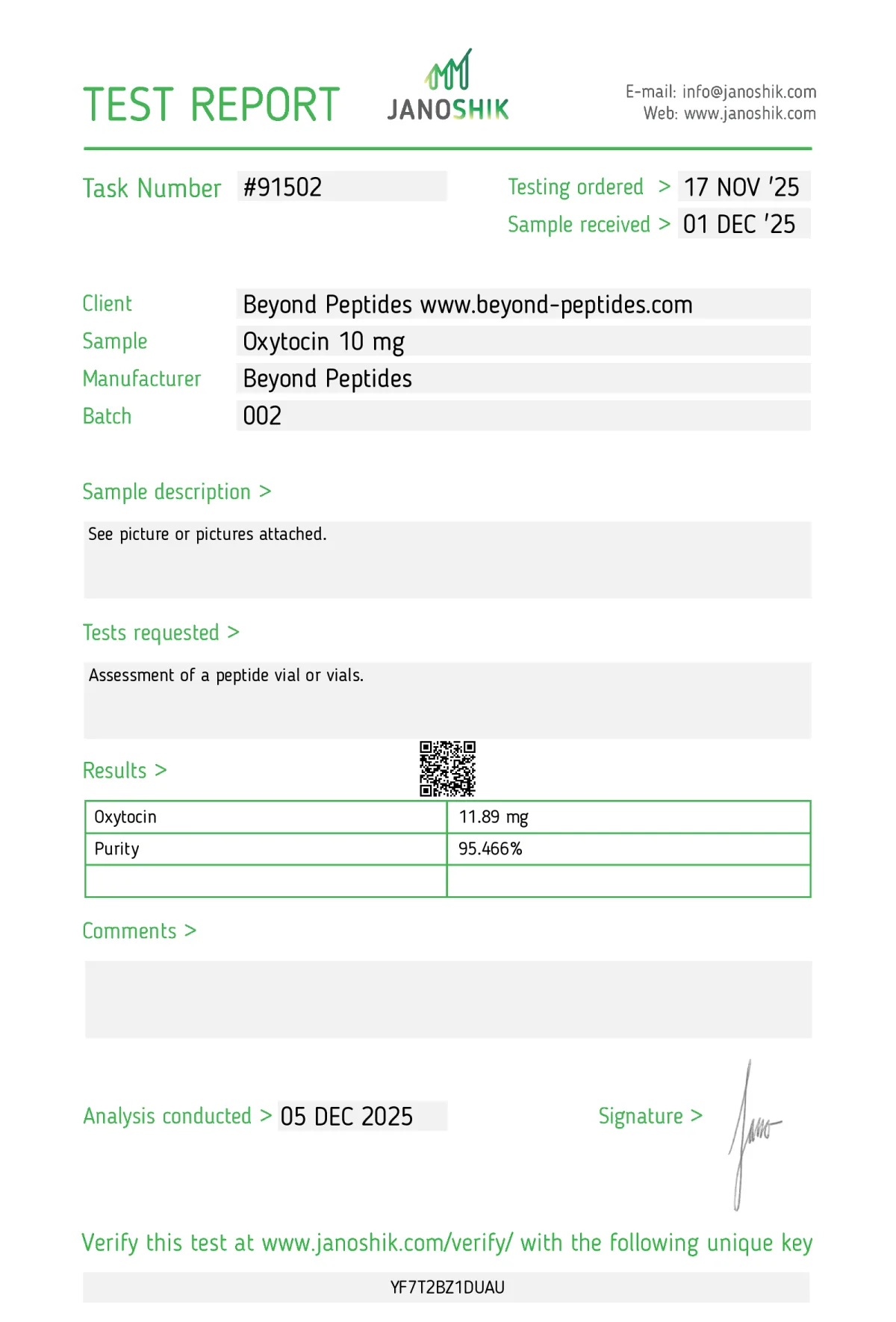
Premium Oxytocin (OXT) Research Peptide for Sale | 10mg Lyophilized Powder | ≥99% Purity | 48-Hour Delivery Across EU & UK
Oxytocin Peptide: The Master Neuropeptide of Social Bonding & Reproductive Physiology
Buy Oxytocin Peptide EU & UK, eupeptidelap.co.uk is proud to present Oxytocin Peptide, a premium research-grade nonapeptide manufactured to the highest analytical standards. As a trusted peptide vendor uk and leading EU peptide supplier, we provide researchers across Europe with Oxytocin for sale that delivers exceptional purity, consistency, and documented quality for advanced studies in neuroendocrinology, social behaviour, and reproductive physiology .
Oxytocin (OXT) is a nine-amino acid neuropeptide (Cys-Tyr-Ile-Gln-Asn-Cys-Pro-Leu-Gly) with a molecular weight of 1007.2 Da and molecular formula C₄₃H₆₆N₁₂O₁₂S₂ . Discovered in 1906 by Sir Henry Dale, oxytocin was first identified for its role in uterine contraction during childbirth and milk ejection during lactation . Over the past century, research has expanded dramatically to reveal oxytocin as a master regulator of social behaviour, emotional bonding, trust, and stress responses .
Oxytocin is synthesized primarily in the paraventricular and supraoptic nuclei of the hypothalamus and released from the posterior pituitary gland into the bloodstream . It also functions as a neurotransmitter within the central nervous system, acting on oxytocin receptors (OXTR) widely distributed throughout the brain, including the amygdala, hippocampus, nucleus accumbens, and prefrontal cortex . This dual role as both a peripheral hormone and central neuromodulator underpins its diverse effects on physiology and behaviour .
For researchers seeking to buy peptide online EU for investigations into social behaviour, maternal bonding, autism spectrum disorders, or reproductive physiology, eupeptidelap.co.uk offers this premium research compound with comprehensive documentation, including Certificates of Analysis and batch-specific purity data. Whether your laboratory is based in London, Berlin, Paris, or anywhere in the European Union, our guaranteed 48 hour delivery peptide service ensures your research continues without interruption. Buy Oxytocin Peptide EU & UK
The Scientific Foundation of Oxytocin Research
Discovery and Historical Significance
Oxytocin was first discovered in 1906 by British pharmacologist Sir Henry Dale, who identified a substance in pituitary extracts that stimulated uterine contraction . In 1909, it was shown to stimulate milk ejection in lactating animals, establishing its dual role in reproduction . The structure of oxytocin was determined by Vincent du Vigneaud in 1953, who later received the Nobel Prize in Chemistry for this work . Oxytocin became the first peptide hormone to be sequenced and synthesized, marking a landmark achievement in peptide chemistry .
Molecular Structure and Properties
Oxytocin is a cyclic nonapeptide with a disulfide bridge between cysteine residues at positions 1 and 6, forming a six-amino acid ring with a three-amino acid tail . Key structural features include:
-
Amino Acid Sequence: Cys-Tyr-Ile-Gln-Asn-Cys-Pro-Leu-Gly (CYIQNCPLG)
-
Molecular Weight: 1007.2 Da
-
Molecular Formula: C₄₃H₆₆N₁₂O₁₂S₂
-
Disulfide Bond: Cys1-Cys6 cyclic structure
-
Solubility: Highly soluble in water and aqueous buffers
-
Stability: Stable in solution at 4°C; can be stored frozen for extended periods
The cyclic structure is essential for receptor binding and biological activity. Oxytocin shares structural similarity with vasopressin (arginine vasopressin, AVP), differing only in two amino acid residues, which accounts for some cross-reactivity at their respective receptors .
Mechanism of Action
Oxytocin exerts its effects through binding to oxytocin receptors (OXTR), a G protein-coupled receptor (GPCR) belonging to the rhodopsin-like receptor family . Upon binding, OXTR activates multiple intracellular signaling cascades:
Gq/11 Pathway: The primary signaling pathway involves activation of Gq/11 proteins, stimulating phospholipase C (PLC), which generates inositol trisphosphate (IP₃) and diacylglycerol (DAG), leading to intracellular calcium release and activation of protein kinase C (PKC) .
Gs Pathway: In some cell types, oxytocin couples to Gs proteins, activating adenylyl cyclase and increasing cAMP levels .
Gi/o Pathway: Oxytocin can also activate Gi/o proteins, modulating potassium channels and reducing neuronal excitability .
MAPK/ERK Pathway: Receptor activation triggers the mitogen-activated protein kinase (MAPK) cascade, influencing gene expression and long-term cellular changes .
Physiological Functions
Reproductive Physiology: Oxytocin is essential for parturition (uterine contraction) and lactation (milk ejection) . During labour, oxytocin increases uterine contractility through direct action on myometrial smooth muscle. After birth, suckling stimulates oxytocin release, triggering milk let-down from mammary glands .
Social Behaviour: Oxytocin promotes social bonding, maternal behaviour, pair bonding, trust, empathy, and social recognition . In animal models, oxytocin facilitates pair bonding in monogamous species such as prairie voles . In humans, intranasal oxytocin increases trust, cooperation, and emotional recognition .
Stress Regulation: Oxytocin modulates the hypothalamic-pituitary-adrenal (HPA) axis, reducing stress-induced cortisol release . It exerts anxiolytic effects and promotes resilience to stress .
Bonding and Attachment: Oxytocin facilitates mother-infant bonding, romantic attachment, and social affiliation . It enhances social memory and recognition, critical for forming and maintaining social relationships .
Key Research Applications
Social Behaviour and Neuroscience Research
Oxytocin is extensively used in studies investigating social behaviour, social cognition, and neurodevelopmental disorders:
-
Social Bonding: Investigate the neural mechanisms underlying pair bonding, maternal behaviour, and social attachment
-
Trust and Cooperation: Study the effects of oxytocin on trust, cooperation, and prosocial behaviour
-
Social Recognition: Research oxytocin’s role in social memory and recognition of conspecifics
-
Autism Spectrum Disorders: Explore oxytocin’s potential as a therapeutic target for social deficits in autism
-
Schizophrenia: Investigate oxytocin modulation of social cognition in psychiatric disorders
Reproductive Biology Research
Oxytocin is a critical tool for studying reproductive physiology:
-
Parturition: Investigate the molecular mechanisms of uterine contraction and labour onset
-
Lactation: Study oxytocin’s role in milk ejection and maternal behaviour
-
Fertility: Explore oxytocin effects on gamete transport and reproductive tract function
-
Placental Biology: Research oxytocin expression and function in placental tissues
Stress and Anxiety Research
Oxytocin modulates stress responses and anxiety-related behaviours:
-
HPA Axis Regulation: Investigate oxytocin effects on corticotropin-releasing hormone (CRH) and cortisol release
-
Anxiolytic Effects: Study oxytocin’s ability to reduce anxiety-like behaviour in animal models
-
Stress Resilience: Explore oxytocin’s role in promoting resilience to chronic stress
-
Fear Extinction: Investigate oxytocin modulation of fear learning and extinction
Addiction and Reward Research
Oxytocin influences reward processing and addictive behaviours:
-
Substance Use Disorders: Study oxytocin effects on drug-seeking behaviour and relapse
-
Reward Circuitry: Investigate oxytocin modulation of mesolimbic dopamine pathways
-
Social Reward: Explore oxytocin’s role in processing social versus non-social rewards
Pain Research
Oxytocin has analgesic properties that are being actively investigated:
-
Nociception: Study oxytocin effects on pain perception and processing
-
Chronic Pain: Investigate oxytocin modulation of chronic pain conditions
-
Opioid Interactions: Explore interactions between oxytocin and endogenous opioid systems
Eating Behaviour and Metabolism
Emerging research implicates oxytocin in appetite regulation:
-
Feeding Behaviour: Study oxytocin effects on food intake and satiety
-
Body Weight Regulation: Investigate oxytocin modulation of energy homeostasis
-
Metabolic Disorders: Explore oxytocin’s potential in obesity and metabolic syndrome
Quality Assurance: Setting the Standard for Research Compounds
Manufacturing Excellence
eupeptidelap.co.uk sources Oxytocin Peptide from certified GMP facilities with rigorous quality control protocols:
-
HPLC Purity Analysis: ≥99% purity verified by high-performance liquid chromatography
-
Mass Spectrometry Verification: Molecular weight confirmation via LC-HRMS
-
Batch-Specific Certificates of Analysis: Complete documentation for each production run
-
Research-Use Only (RUO) Labeling: Full compliance with research compound regulations
Chemical and Product Specifications
| Specification | Detail |
|---|---|
| Product Name | Oxytocin Peptide (OXT) |
| CAS Number | 50-56-6 |
| Molecular Formula | C₄₃H₆₆N₁₂O₁₂S₂ |
| Molecular Weight | 1007.2 Da |
| Amino Acid Sequence | Cys-Tyr-Ile-Gln-Asn-Cys-Pro-Leu-Gly (CYIQNCPLG) |
| Structure | Cyclic nonapeptide with disulfide bridge (Cys1-Cys6) |
| Purity | ≥99% (HPLC verified) |
| Appearance | White to off-white lyophilized powder |
| Form | Lyophilized powder |
| Solubility | Soluble in sterile water, bacteriostatic water, or PBS |
| Target Receptor | Oxytocin receptor (OXTR) |
| Storage (Lyophilized) | -20°C; protect from light and moisture |
| Storage (Reconstituted) | 2-8°C for short-term; aliquot and store at -20°C for longer storage |
| Shelf Life | 24 months from date of manufacture (lyophilized) |
| Intended Use | Research and laboratory use only |
| Documentation | Certificate of Analysis provided with each batch |
Stability and Handling Guidelines
Lyophilized Powder Storage: Store lyophilized oxytocin powder at -20°C in a dry, dark environment, protected from light and moisture . Under proper storage conditions, the powder maintains stability for up to 24 months from the date of manufacture.
Reconstitution Protocol:
-
Allow vial and solvent to reach ambient temperature before opening to prevent condensation
-
Reconstitute using sterile bacteriostatic water or appropriate buffer according to research protocol
-
Inject solvent slowly down the inside wall of the vial to minimize foaming
-
Gently swirl or roll the vial until fully dissolved—do not shake vigorously
-
Label the vial with the date of reconstitution
-
Refrigerate immediately at 2-8°C
Reconstituted Solution Storage: Store reconstituted oxytocin at 2-8°C for short-term use. For longer-term storage, aliquot into single-use portions and store at -20°C . Avoid repeated freeze-thaw cycles.
Protection from Light and Moisture:
-
Store in original packaging protected from light
-
Keep vials tightly sealed when not in use
-
Allow refrigerated vials to reach room temperature before opening to prevent condensation
Key Benefits
-
Premium Quality Manufacturing: GMP-certified production, ≥99% HPLC-verified purity with lot-specific COAs
-
Well-Characterized Nonapeptide: Over 115 years of research since discovery in 1906
-
Social Behaviour Research: Studies bonding, attachment, trust, empathy, and social recognition
-
Reproductive Physiology: Essential for parturition, lactation, and fertility research
-
Stress Regulation: Modulates HPA axis and reduces anxiety-like behaviour
-
Autism Research: Investigated for social deficits in autism spectrum disorders
-
Addiction Studies: Explored for substance use disorders and reward processing
-
Pain Research: Analgesic properties and opioid system interactions
-
Eating Behaviour: Investigates appetite regulation and body weight control
-
Blood-Brain Barrier: Naturally crosses the BBB; intranasal administration bypasses peripheral metabolism
-
Receptor Specificity: High affinity for oxytocin receptor (OXTR) with minimal vasopressin cross-reactivity
-
First Synthesized Peptide: Historical significance in peptide chemistry
-
Comprehensive Documentation: Certificates of Analysis with batch-specific purity data
-
48-Hour EU & UK Delivery: Rapid shipping to research facilities across Europe
-
Batch Consistency: Rigorous quality control ensures lot-to-lot reproducibility
-
EU Sourced: Available from within the European Union
Frequently Asked Questions
Q: What is Oxytocin and how does it work?
A: Oxytocin is a nine-amino acid neuropeptide that acts as both a hormone and neurotransmitter . It binds to oxytocin receptors (OXTR), G protein-coupled receptors widely distributed in the brain and peripheral tissues, activating multiple signaling cascades including Gq/11, Gs, and MAPK/ERK pathways .
Q: What purity level can I expect when I buy Oxytocin from eupeptidelap.co.uk?
A: All Oxytocin Peptide from eupeptidelap.co.uk is tested to ≥99% purity by HPLC, with Certificates of Analysis provided with every order . Each batch is individually analyzed, ensuring you receive material suitable for rigorous research applications.
Q: What is the molecular weight and CAS number of Oxytocin?
A: Oxytocin has a molecular weight of 1007.2 Da and CAS number 50-56-6 . Its molecular formula is C₄₃H₆₆N₁₂O₁₂S₂ and amino acid sequence Cys-Tyr-Ile-Gln-Asn-Cys-Pro-Leu-Gly (CYIQNCPLG) .
Q: How should I store Oxytocin for long-term stability?
A: Store lyophilized oxytocin powder at -20°C, protected from light and moisture . Under proper storage conditions, the powder maintains stability for up to 24 months. For short-term use, store reconstituted solution at 2-8°C; for longer-term storage, aliquot and store at -20°C .
Q: What is the solubility of Oxytocin?
A: Oxytocin is highly soluble in sterile water, bacteriostatic water, and PBS . Reconstitute according to research protocol to achieve desired concentration.
Q: What research areas commonly use Oxytocin?
A: Oxytocin is widely used in social behaviour and neuroscience research, reproductive biology, stress and anxiety studies, addiction and reward research, pain research, and eating behaviour and metabolism studies .
Q: Does Oxytocin cross the blood-brain barrier?
A: Yes, oxytocin naturally crosses the blood-brain barrier, though limitedly . Intranasal administration is commonly used in research to bypass peripheral metabolism and achieve central delivery .
Q: Do you ship Oxytocin to EU countries?
A: Yes. As a dedicated EU peptide supplier, we ship Oxytocin Peptide to all European Union member states with our guaranteed 48 hour delivery peptide service. Our EU fulfilment centre ensures rapid delivery without customs delays. All shipments use protective packaging to maintain compound integrity during transit.
Q: What documentation do you provide with Oxytocin orders?
A: Every order includes a Certificate of Analysis (COA) with batch-specific purity data . Additional documentation, including HPLC chromatograms and mass spectrometry data, is available upon request for researchers requiring comprehensive analytical verification.
Q: Do you offer bulk quantities of Oxytocin for institutional research?
A: Yes. We accommodate bulk orders for research institutions. Contact our team at sales@eupeptidelap.co.uk for volume pricing, custom requirements, and supply agreements for ongoing research programs.
Advance Your Research with Oxytocin Peptide
eupeptidelap.co.uk is your trusted source for Oxytocin Peptide, the premium choice for researchers investigating social behaviour, reproductive physiology, and neuroendocrine regulation. With over a century of research establishing its role as a master regulator of social bonding and reproductive function, oxytocin represents a foundational tool for understanding the molecular mechanisms of social behaviour and stress resilience. ...........................................
Whether you are exploring social bonding mechanisms, designing stress regulation studies, investigating autism spectrum disorders, or researching reproductive physiology, our rigorously tested compound provides the quality and consistency your work demands. . . . . . . . . . . . . . . . . . . . . . . . . . . . . . . . . . . . . . . .
Order today and experience the eupeptidelap.co.uk difference – premium quality, rapid 48-hour delivery across the EU and UK, and expert support for the European research community.