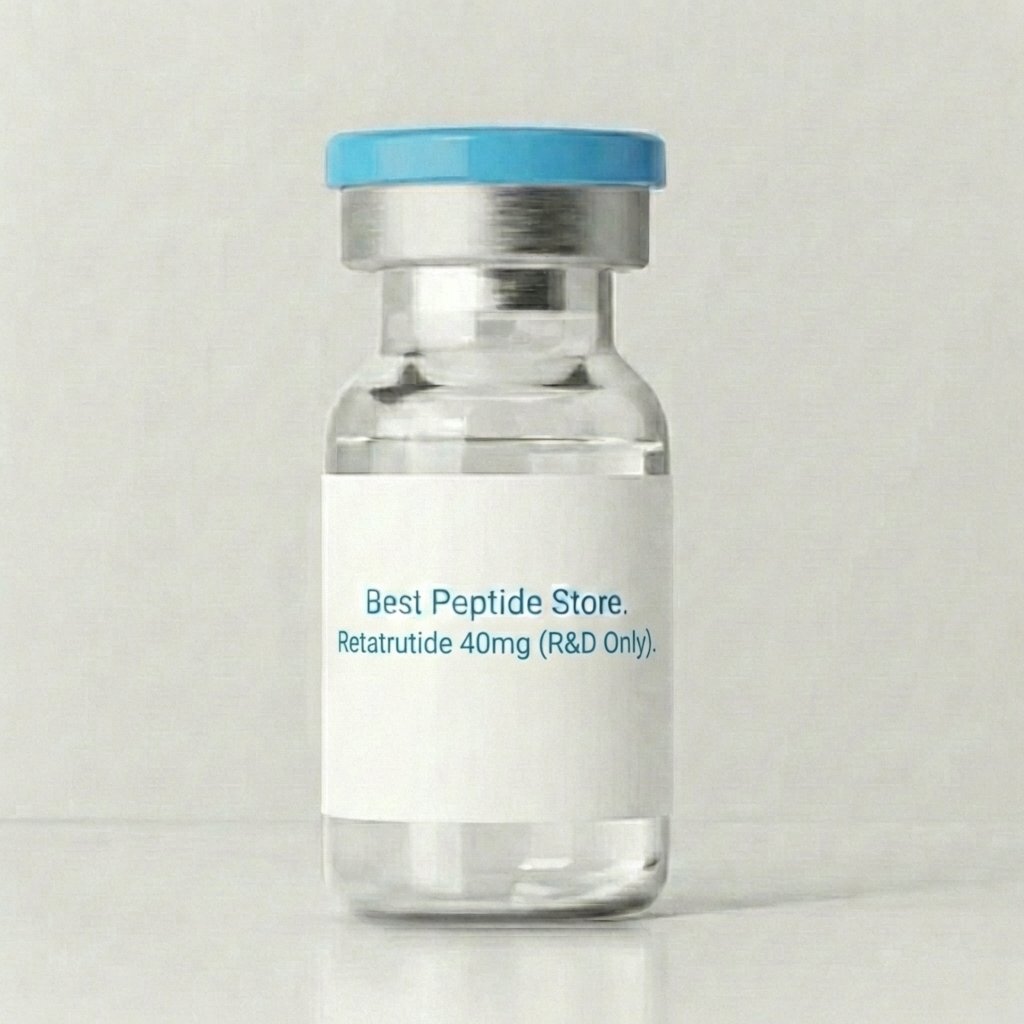
Premium Retatrutide (LY3437943) for Sale | 40mg per Vial | ≥98% Purity | 48-Hour Delivery Across EU & UK
Retatrutide (LY3437943): The Revolutionary Triple Agonist Redefining Metabolic Research
eupeptidelap.co.uk is proud to present Retatrutide 40mg (R&D Only) , a premium research-grade triple receptor agonist peptide manufactured to the highest analytical standards. As a trusted peptide vendor uk and leading EU peptide supplier, we provide researchers across Europe with Retatrutide for sale that delivers exceptional purity, consistency, and documented quality .
Retatrutide (LY3437943) represents a groundbreaking advancement in metabolic research as the first-in-class triple agonist peptide targeting three key hormone receptors simultaneously: the glucagon-like peptide-1 (GLP-1) receptor, the glucose-dependent insulinotropic polypeptide (GIP) receptor, and the glucagon (GCG) receptor . This sophisticated 39-amino acid synthetic peptide is engineered to harness the complementary actions of all three incretin hormones, producing unprecedented metabolic effects that surpass even the most advanced dual agonists currently available .
The molecular formula of Retatrutide is C₂₂₁H₃₄₂N₄₆O₆₈, with a molecular weight of 4731.33 Da . Its unique structural design enables balanced activation of all three receptor types, creating a synergistic effect that addresses obesity and metabolic dysfunction from multiple angles. The triple agonism approach leverages:
-
GLP-1 Receptor Activation: Enhances insulin secretion in response to glucose, slows gastric emptying, and acts directly on brain appetite centers to suppress hunger
-
GIP Receptor Activation: Stimulates insulin release, influences fat metabolism and storage, and may affect brain reward pathways associated with food
-
Glucagon Receptor Activation: Increases energy expenditure, promotes lipolysis (fat breakdown), and reduces fat accumulation in the liver—while the potent glucose-lowering effects of GLP-1 and GIP offset glucagon’s potential blood sugar-raising effects
For researchers seeking to buy peptide online EU for investigations into obesity pharmacotherapy, type 2 diabetes, metabolic syndrome, or non-alcoholic fatty liver disease (NAFLD), eupeptidelap.co.uk offers this premium research compound with comprehensive documentation, including Certificates of Analysis and batch-specific purity data . Whether your laboratory is based in London, Berlin, Paris, or anywhere in the European Union, our guaranteed 48 hour delivery peptide service ensures your research continues without interruption.
The Scientific Foundation of Retatrutide
Understanding the Triple Agonist Mechanism
To appreciate the innovation of Retatrutide, it’s essential to understand the hormones it mimics. The human body uses a complex network of signals to regulate appetite, blood sugar, and energy balance. Retatrutide simultaneously activates three key receptors in this network, creating a powerful, synergistic effect that addresses metabolic dysfunction from multiple angles .
Glucagon-Like Peptide-1 (GLP-1): Secreted by intestinal L-cells in response to meals, GLP-1 is a cornerstone of modern metabolic drugs. It enhances insulin secretion in a glucose-dependent manner (significantly reducing hypoglycemia risk), slows gastric emptying to increase feelings of fullness, and acts directly on the hypothalamus to suppress appetite. GLP-1 receptors are found in the pancreas, gastric mucosa, kidney, lung, heart, and brain regions including the hypothalamus, amygdala, and nucleus accumbens .
Glucose-Dependent Insulinotropic Polypeptide (GIP): Released from intestinal K cells postprandially, GIP was once thought less critical but has been re-evaluated following the success of dual agonists. GIP stimulates insulin secretion, reduces appetite by impacting gastric emptying, and influences adipose tissue by stimulating adipogenesis and inhibiting lipolysis. GIP receptors are expressed in pancreatic β-cells, adipose tissue, and the nervous system .
Glucagon: Produced in pancreatic α-cells, glucagon is traditionally known for raising blood sugar by stimulating hepatic glucose release. However, it also increases energy expenditure, promotes fat breakdown (lipolysis), and reduces hepatic fat accumulation. The challenge has always been harnessing these benefits without causing hyperglycemia—a challenge Retatrutide overcomes through balanced triple agonism .
Synergistic Effects on Appetite and Satiety
A primary driver of weight gain is an imbalance in hunger-regulating hormones. Retatrutide tackles this comprehensively :
-
GLP-1 Component: Acts on appetite centers in the hypothalamus, sending strong satiety signals and reducing desire to eat
-
GIP Component: May further enhance these effects by influencing the brain’s reward pathways associated with food
-
Combined Action: Along with slowed gastric emptying, this leads to a profound and sustained reduction in caloric intake that feels more manageable than willpower-based dieting alone
Enhancing Glycemic Control
For research into insulin resistance and prediabetes, Retatrutide offers robust support :
-
Incretin Effect: Both GLP-1 and GIP stimulate pancreatic insulin release only when blood glucose is elevated
-
Glucose-Dependent Mechanism: This significantly reduces the risk of hypoglycemia, a concern with older diabetes medications
-
Self-Regulating System: Glucagon receptor agonism is balanced by the potent insulin-stimulating effects of GLP-1 and GIP, enabling effective blood sugar management without dangerous peaks and troughs
Boosting Energy Expenditure and Fat Metabolism
This is where Retatrutide truly distinguishes itself from previous generations of metabolic peptides :
-
Increased Basal Metabolic Rate: Glucagon receptor agonism effectively “turns up the thermostat,” increasing overall energy expenditure
-
Hepatic Fat Reduction: Glucagon signaling helps reduce hepatic steatosis (fatty liver) by promoting the breakdown and export of stored fats
-
Lipolysis Stimulation: Releases stored fatty acids from adipose tissue to be used for energy
-
Targeted Fat Loss: This dual action specifically targets harmful visceral and ectopic fat deposits most strongly linked to metabolic disease and systemic inflammation
Key Research Applications
Obesity and Weight Loss Research
Retatrutide is extensively used in studies investigating body weight regulation, adipose tissue biology, and energy homeostasis. Clinical trials have demonstrated unprecedented weight loss results that set a new high bar for obesity pharmacotherapy research .
Phase 2 Clinical Trial Results: The landmark Phase 2 randomized, double-blind, placebo-controlled trial published in the New England Journal of Medicine (2023) enrolled 338 adults with BMI ≥30 (or ≥27 with a weight-related comorbidity) without type 2 diabetes. Results after 48 weeks showed :
-
Unprecedented Weight Loss: Participants receiving 12 mg weekly achieved a mean weight reduction of 24.2% of initial body weight—translating to approximately 26.4 kg (58 pounds)
-
Dose-Dependent Efficacy: Weight loss effects were clearly dose-dependent
-
Continued Loss Trajectory: Weight loss had not plateaued at 48 weeks, suggesting longer treatment could yield even greater results
-
Subgroup Analysis: Obese female subjects achieved up to 28.5% weight loss
Phase 3 TRIUMPH Program Results: Preliminary Phase 3 results reported in late 2025 demonstrated even more impressive outcomes :
-
28.7% Average Weight Loss: At 68 weeks, the 12 mg dose led to average weight loss of 28.7% (32.3 kg / 71.2 pounds)
-
Pain Reduction: In osteoarthritis patients, the study drug led to a 74.3% reduction in pain scores
-
Comparison: This exceeds the 22% weight loss achieved by Zepbound (tirzepatide) at 15 mg over 72 weeks
Type 2 Diabetes Research
Retatrutide has demonstrated exceptional efficacy in glycemic control research :
-
Phase 2 Diabetes Study: In 281 T2D subjects (± metformin) over 24 weeks, mean HbA1c reductions ranged from -0.43% (0.5 mg) to -2.02% (12 mg), compared to -1.41% for dulaglutide (1.5 mg)
-
Proof-of-Concept Study: After 12 weeks, retatrutide (0.5-12 mg) reduced placebo-adjusted HbA1c up to -1.60% at 3/6 mg doses, with weight loss of -8.96 kg at the highest dose
Non-Alcoholic Fatty Liver Disease (NAFLD/NASH) Research
A particularly exciting finding from Phase 2 trials was Retatrutide’s powerful effect on liver fat :
-
Baseline Liver Fat: Participants had average liver fat content of approximately 20%
-
Post-Treatment Reduction: After 48 weeks on 12 mg dose, liver fat decreased by an average of over 86%
-
Complete Resolution: Nearly 86% of participants achieved complete resolution of excess liver fat (below 5%)
These findings strongly support the proposed mechanism of glucagon receptor agonism and position Retatrutide as a leading candidate for NAFLD/NASH research.
Cardiometabolic Research
Beyond weight loss, participants saw significant improvements in key health markers :
-
Blood Pressure Reduction: Dose-dependent decreases in both systolic and diastolic blood pressure
-
Lipid Profile Improvement: Reduced triglycerides, increased beneficial HDL cholesterol
-
Glycemic Normalization: Every participant with prediabetes at baseline in the 8 mg and 12 mg groups reverted to normal glycemic status by study end
Ongoing Phase 3 TRIUMPH Program Research
Based on highly successful Phase 2 results, Eli Lilly has launched an extensive Phase 3 clinical trial program (TRIUMPH) evaluating Retatrutide in diverse populations and for different indications :
| Trial | Population | Duration | Primary Focus |
|---|---|---|---|
| TRIUMPH-1 | Chronic weight management | Long-term | Obesity with/without T2D |
| TRIUMPH-2 | Obstructive sleep apnea | Variable | OSA in obesity |
| TRIUMPH-3 | 1800 obese subjects with CVD | 113 weeks | Cardiovascular outcomes |
| TRIUMPH-4 | Knee osteoarthritis | Variable | Pain and function |
| TRIUMPH-5 | Chronic low back pain | Variable | Pain management |
| TRIUMPH-CV | Cardiovascular/renal outcomes | Long-term | Major adverse cardiac events |
| TRIUMPH-MASH | Biopsy-confirmed NASH | 12 months | Liver histology improvement |
Quality Assurance: Setting the Standard for Research Compounds
Manufacturing Excellence
eupeptidelap.co.uk sources Retatrutide from certified GMP facilities with rigorous quality control protocols :
-
HPLC Purity Analysis: ≥98% purity verified by high-performance liquid chromatography
-
Mass Spectrometry Verification: Molecular weight confirmation via LC-HRMS
-
Batch-Specific Certificates of Analysis: Complete documentation for each production run
-
Regulatory Compliance: Research Use Only (RUO) labeling with proper documentation
-
Safety Data Sheets (SDS): Provided with every order for safe handling
Chemical and Product Specifications
| Specification | Detail |
|---|---|
| Product Name | Retatrutide (LY3437943) – R&D Only |
| CAS Number | 2381089-83-2 |
| Molecular Formula | C₂₂₁H₃₄₂N₄₆O₆₈ |
| Molecular Weight | 4731.33 Da |
| Amino Acid Length | 39 amino acids |
| Purity | ≥98% (HPLC verified) |
| Appearance | White to off-white lyophilized solid |
| Solubility | H₂O: 20 mg/mL (ultrasonic; adjust pH to 9 with aqueous NH₃); DMSO: 50 mg/mL (ultrasonic) |
| Mechanism | Triple GLP-1/GIP/Glucagon receptor agonist |
| Storage (Powder) | -20°C to -80°C; stable up to 2 years at -80°C, 1 year at -20°C; protect from light and moisture |
| Storage (Reconstituted) | 2-8°C for several weeks; aliquot to avoid freeze-thaw cycles |
| Shipping | Ambient temperature with protective packaging; cold chain available |
| Intended Use | Research and laboratory use only |
| Documentation | Certificate of Analysis, SDS provided |
Stability and Handling Guidelines
Lyophilized Powder Storage: Retatrutide raw powder should be stored at -20°C to -80°C in a dry, dark environment, protected from light and moisture . In its lyophilized form, it can maintain potency for up to four years when properly handled. Use manual-defrost freezers or chest freezers rather than frost-free units to avoid temperature fluctuations. Store vials in the back of freezers (not door compartments) and maintain detailed temperature logs .
Reconstitution Protocol :
-
Allow vial and solvent to reach ambient temperature before opening to prevent condensation
-
Reconstitute using bacteriostatic water or sterile solvent according to research protocol
-
Inject solvent gently at a 45-degree angle, allowing it to run down the inside wall
-
Swirl gently—do not shake—to dissolve completely
-
Use fresh sterile needles for each vial access
-
Clean rubber stoppers with alcohol swabs before each puncture
Reconstituted Solution Storage: Once reconstituted, store at 2-8°C (refrigeration). Most formulations remain stable for several weeks to a few months. If freezing is necessary, aliquot into multiple smaller vials containing single-use amounts to minimize freeze-thaw cycles. Thaw completely in refrigerator over 24 hours—do not refreeze after use .
Protection from Light and Moisture :
-
Use amber or opaque vials to block UV light
-
Transfer to light-blocking containers if original packaging is transparent
-
Keep vials tightly sealed with desiccants when possible
-
Allow frozen vials to reach room temperature in a desiccator before opening
Key Benefits
-
Premium Quality Manufacturing: GMP-certified production, ≥98% HPLC-verified purity
-
First-In-Class Triple Agonist: Simultaneous GLP-1, GIP, and glucagon receptor activation for synergistic research applications
-
High Concentration: 40mg per vial—substantial quantity for extended research studies
-
Unprecedented Weight Loss Research: Enables investigation of 24-28% body weight reduction in obesity models
-
Superior Efficacy: Phase 3 results demonstrate 28.7% average weight loss at 68 weeks
-
NAFLD/NASH Research: Reduces liver fat by >86% with nearly complete resolution in Phase 2
-
Glycemic Control Studies: HbA1c reductions up to -2.02% in T2D research models
-
Cardiometabolic Research: Improves blood pressure, lipid profiles, and insulin sensitivity
-
Appetite Regulation Studies: Triple mechanism targeting hypothalamic and reward pathways
-
Energy Expenditure Research: Glucagon agonism increases basal metabolic rate
-
Osteoarthritis Research: Reduces pain scores by 74.3% in obesity-related OA models
-
Sleep Apnea Research: Being studied in OSA populations (TRIUMPH-2)
-
Cardiovascular Outcomes Research: Phase 3 TRIUMPH-3 evaluating CVD endpoints
-
MASH/MAFLD Research: Dedicated Phase 2/3 trials in biopsy-confirmed NASH
-
Type 1 Diabetes Research: Potential applications in insulin reduction studies
-
Prediabetes Studies: 100% normalization of prediabetes at higher doses
-
Comprehensive Documentation: Certificates of Analysis with batch-specific purity data
-
Proper RUO Labeling: Full compliance with research-use-only regulations
-
48-Hour EU & UK Delivery: Rapid shipping to research facilities across Europe
-
Batch Consistency: Rigorous quality control ensures lot-to-lot reproducibility
-
EU Sourced: Available from within the European Union
Frequently Asked Questions
Q: Is Retatrutide 40mg (R&D Only) suitable for human consumption?
A: No. Retatrutide 40mg (R&D Only) from eupeptidelap.co.uk is strictly for research and laboratory use only . It is not for human or animal consumption, and must not be used for therapeutic, diagnostic, or clinical applications. While Retatrutide is being investigated in clinical trials by Eli Lilly, research-grade material is intended for investigational purposes only. Regulatory agencies have issued warnings against unapproved versions sold without proper RUO status . Researchers must handle this compound in accordance with institutional safety guidelines and local regulations.
Q: Is it legal to sell Retatrutide for research purposes in the UK?
A: The sale of unlicensed peptides like Retatrutide under “research use only” labeling occupies a legal grey area but is permissible under strict conditions . Legitimate buyers include academic labs, CROs, pharmaceutical R&D, and licensed clinics conducting non-human research . Proper documentation including Certificates of Analysis, Safety Data Sheets, and explicit RUO labeling is mandatory . The Medicines and Healthcare products Regulatory Agency (MHRA) may take enforcement action if marketing materials or user reviews indicate personal human use .
Q: What purity level can I expect when I buy Retatrutide from eupeptidelap.co.uk?
A: All Retatrutide from eupeptidelap.co.uk is tested to ≥98% purity by HPLC . Each batch is individually analyzed, and Certificates of Analysis are provided with every order, ensuring you receive material suitable for rigorous research applications.
Q: How effective is Retatrutide for weight loss in research models?
A: In clinical trials, Retatrutide has demonstrated unprecedented weight loss results. Phase 2 studies at 48 weeks showed 24.2% average weight loss at 12 mg dose . Phase 3 results at 68 weeks demonstrated 28.7% average weight loss (32.3 kg / 71.2 pounds) . This represents the highest weight loss recorded for any anti-obesity medication to date.
Q: How should I store Retatrutide for long-term stability?
A: Store lyophilized Retatrutide powder at -20°C to -80°C, protected from light and moisture . Powder is stable for up to 2 years at -80°C and 1 year at -20°C . Use manual-defrost freezers and store vials in the back (not doors). After reconstitution, store at 2-8°C for several weeks or aliquot into single-use portions and freeze at -80°C for up to 6 months. Avoid repeated freeze-thaw cycles .
Q: What is the molecular weight and formula of Retatrutide?
A: Retatrutide has the molecular formula C₂₂₁H₃₄₂N₄₆O₆₈ and a molecular weight of 4731.33 Da . It is a 39-amino acid peptide engineered for balanced activation of GLP-1, GIP, and glucagon receptors.
Q: What is the mechanism of action of Retatrutide?
A: Retatrutide is a first-in-class triple receptor agonist targeting GLP-1, GIP, and glucagon receptors simultaneously . GLP-1 and GIP enhance insulin secretion, suppress appetite, and slow gastric emptying, while glucagon increases energy expenditure and promotes fat breakdown. The glucose-lowering effects of GLP-1 and GIP offset glucagon’s potential blood sugar-raising effects, creating a synergistic system .
Q: What research areas commonly use Retatrutide?
A: Retatrutide is widely used in obesity and weight loss research, type 2 diabetes research, NAFLD/NASH research, cardiometabolic studies, appetite regulation research, energy expenditure studies, osteoarthritis research, sleep apnea research, and cardiovascular outcomes research.
Q: Do you ship Retatrutide to EU countries?
A: Yes. As a dedicated EU peptide supplier, we ship Retatrutide to all European Union member states with our guaranteed 48 hour delivery peptide service. Shipments must comply with EU REACH and labeling standards for RUO compounds . Our EU fulfilment centre ensures rapid delivery without customs delays.
Q: What documentation do you provide with Retatrutide orders?
A: Every order includes a Certificate of Analysis with batch-specific purity data and a Safety Data Sheet (SDS) for safe handling . Additional documentation, including HPLC chromatograms and mass spectrometry data, is available upon request for researchers requiring comprehensive analytical verification.
Q: How does Retatrutide compare to Tirzepatide?
A: Retatrutide (triple GLP-1/GIP/glucagon agonist) represents an advancement beyond Tirzepatide (dual GIP/GLP-1 agonist). Phase 2 trials showed 24.2% weight loss with Retatrutide at 48 weeks compared to approximately 21% with Tirzepatide at 72 weeks . Phase 3 Retatrutide results (28.7% at 68 weeks) exceed Tirzepatide’s 22% at 72 weeks . The addition of glucagon agonism likely drives enhanced effects on energy expenditure and liver fat reduction.
Q: What are the ongoing clinical trials for Retatrutide?
A: The Phase 3 TRIUMPH program includes multiple trials: TRIUMPH-1 (chronic weight management), TRIUMPH-2 (obstructive sleep apnea), TRIUMPH-3 (cardiovascular disease), TRIUMPH-4 (knee osteoarthritis), TRIUMPH-5 (chronic low back pain), TRIUMPH-CV (cardiovascular/renal outcomes), and TRIUMPH-MASH (NASH) . These studies have enrolled over 5,800 participants. . . . . . . . . . . . . . . . . . . . . . . . . . . . . . . . . . . . . . . . . .
Q: Does Retatrutide affect liver fat?
A: Yes, dramatically. In Phase 2 studies, participants on 12 mg dose saw liver fat decrease by over 86% from baseline (approximately 20% down to <5%). Nearly 86% achieved complete resolution of excess liver fat .
Q: What are the common adverse effects observed in Retatrutide trials?
A: The most common adverse events are gastrointestinal: nausea, diarrhea, constipation, and decreased appetite . These effects are consistent with the incretin mimetic drug class. The discontinuation rate for high dose was 18.2% versus 4% for placebo, with some discontinuations attributed to perceived excessive weight loss .
Q: Do you offer bulk quantities of Retatrutide for institutional research?
A: Yes. We accommodate bulk orders for research institutions. Contact our team at sales@eupeptidelap.co.uk for volume pricing, custom requirements, and supply agreements for ongoing research programs.
Advance Your Research with Retatrutide 40mg (R&D Only)
eupeptidelap.co.uk is your trusted source for Retatrutide 40mg (R&D Only) , the premium choice for researchers investigating metabolic disorders, obesity pharmacotherapy, diabetes, and NAFLD/NASH. As the first-in-class triple GLP-1/GIP/glucagon receptor agonist, Retatrutide represents a revolutionary tool for exploring the synergistic actions of all three incretin pathways and their unprecedented therapeutic potential. ...........................................
Whether you are exploring weight loss mechanisms, designing diabetes studies, investigating hepatic steatosis, or researching cardiometabolic outcomes, our rigorously tested compound provides the quality and consistency your work demands.
Order today and experience the eupeptidelap.co.uk difference – premium quality, rapid 48-hour delivery across the EU and UK, and expert support for the European research community.