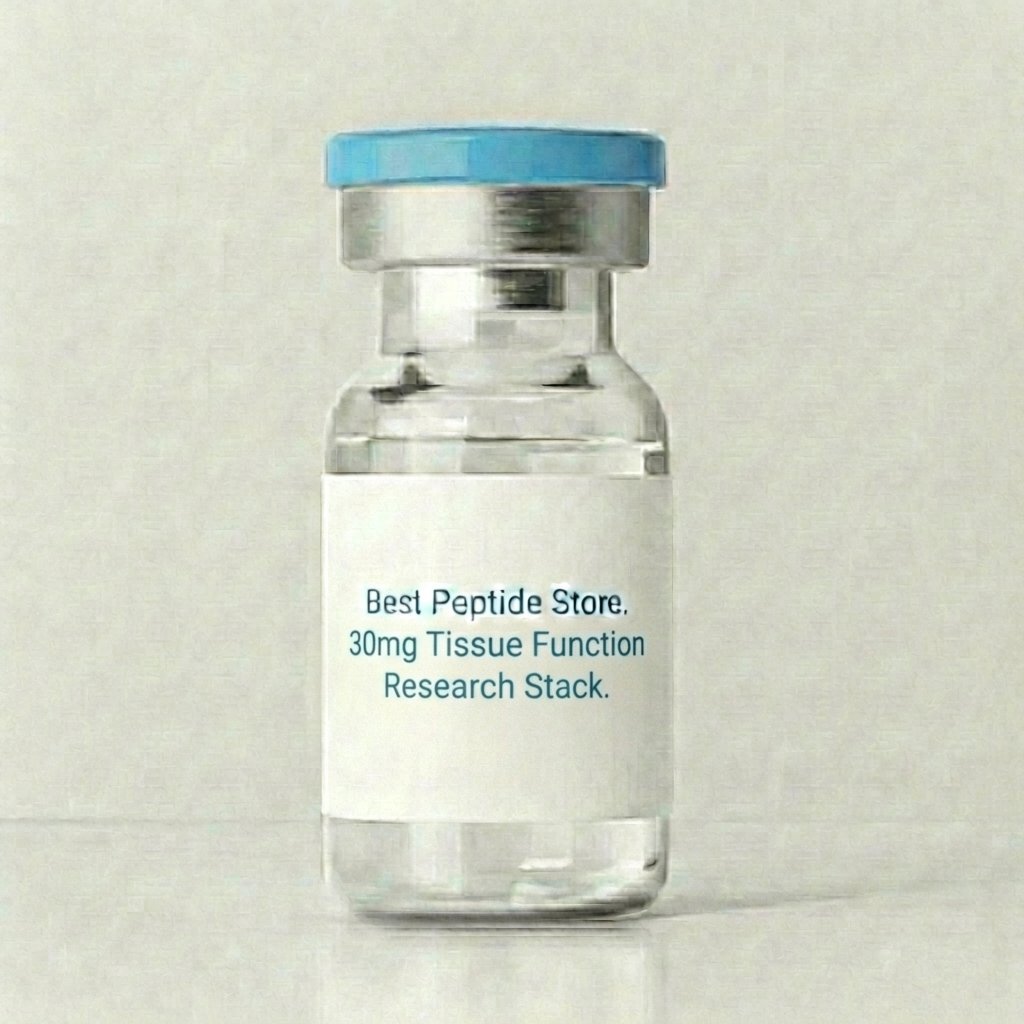
Premium BPC-157 & TB-500 Blend for Sale | Synergistic Formulation for Advanced Research | 48-Hour Delivery Across EU & UK
Tissue Function Research Stack: The Premier Peptide Blend for Regenerative & Connective Tissue Research
https://eupeptidelap.co.uk/ is proud to present the Tissue Function Research Stack, a premium research-grade peptide blend combining two extensively studied regenerative peptides—BPC-157 and TB-500—manufactured to the highest analytical standards. As a trusted peptide vendor uk and leading EU peptide supplier, we provide researchers across Europe with this synergistic blend for sale that delivers exceptional purity, consistency, and documented quality .
This dual-peptide research blend combines BPC-157 (Body Protection Compound-157), a synthetic pentadecapeptide originally derived from a protective protein found in human gastric juice, with TB-500, a synthetic analog of the naturally occurring peptide thymosin beta-4 (Tβ4) . Each vial contains precisely measured quantities of both peptides, supplied as a lyophilized solid to maintain long-term stability and integrity. HPLC-verified at ≥99% purity with full Certificates of Analysis provided, this blend is widely studied in laboratory models of tissue regeneration, angiogenesis, and connective-tissue remodeling .
BPC-157 is a 15-amino-acid peptide (Gly-Glu-Pro-Pro-Pro-Gly-Lys-Pro-Ala-Asp-Asp-Ala-Gly-Leu-Val) characterized by remarkable physicochemical stability across diverse biological environments, including resistance to gastric acid degradation and enzymatic hydrolysis . This stability facilitates multiple routes of administration in research settings. In preclinical models, BPC-157 has been associated with a variety of proposed functions: up-regulation of growth hormone receptor expression in tendon fibroblasts, activation of downstream JAK2 signaling, promotion of angiogenesis via VEGF, modulation of nitric-oxide systems, and influence on collagen synthesis and fibroblast behavior . Microarray analysis of tendon fibroblasts suggests that after BPC-157 exposure, the growth hormone receptor gene is among the top up-regulated genes; moreover, addition of growth hormone to these exposed fibroblasts appears to lead to enhanced proliferation and PCNA expression, and activation of JAK2 .
TB-500 is a synthetic peptide fragment derived from thymosin beta-4 (Tβ4), an endogenous 43-amino-acid polypeptide found broadly in tissues, platelets, and white blood cells, where it is implicated in actin–cytoskeleton regulation, cell migration, and repair processes . The active segment within TB-500 promotes actin polymerization, progenitor cell recruitment, and enhanced cellular migration—processes integral to wound healing . Mechanistic research indicates that TB-500 regulates actin dynamics by binding G-actin, inhibiting polymerization, and modulating integrin-linked kinase, which supports cell motility into damaged zones . Studies suggest it may also enhance vascular endothelial growth factor (VEGF) expression, promote new capillary formation, and influence fibroblast/myofibroblast balance .
For researchers seeking to buy peptide online EU for investigations into tissue regeneration, wound healing, musculoskeletal recovery, or connective tissue remodeling, eupeptidelap.co.uk offers this premium blend with comprehensive documentation, including Certificates of Analysis and batch-specific purity data. Whether your laboratory is based in London, Berlin, Paris, or anywhere in the European Union, our guaranteed 48 hour delivery peptide service ensures your research continues without interruption.
The Scientific Foundation of the Tissue Function Research Stack
Distinct Yet Complementary Mechanisms of Action
The BPC-157 and TB-500 blend represents a strategic combination of two peptides that target distinct yet complementary pathways within the tissue regeneration cascade, offering synergistic effects that surpass what either peptide might achieve alone .
BPC-157: Local Tissue Priming and Growth Factor Modulation
BPC-157 exerts its effects through multiple interconnected mechanisms that have been elucidated through decades of preclinical research . Studies suggest that BPC-157 may prime the microenvironment by up-regulating growth hormone receptor expression, enhancing fibroblast responsiveness, and promoting angiogenesis (via VEGF, NO pathways)—thereby creating a more favorable substrate for tissue repair . Key mechanistic features include:
-
Growth Hormone Receptor Upregulation: Microarray analysis of tendon fibroblasts revealed that after BPC-157 exposure, the growth hormone receptor gene was among the top up-regulated genes; addition of growth hormone to these exposed fibroblasts appeared to lead to enhanced proliferation and PCNA expression, and activation of JAK2 .
-
Angiogenesis Stimulation: BPC-157 promotes angiogenesis through VEGF/VEGFR2-Akt-eNOS signaling and nitric oxide (NO) modulation .
-
Cytoprotective Properties: The peptide demonstrates cytoprotective effects through modulation of cellular stress responses and appears to enhance collagen synthesis and extracellular matrix remodeling .
-
Anti-Inflammatory Actions: BPC-157 exhibits anti-inflammatory properties through inhibition of pro-inflammatory cytokine production and modulation of nuclear factor-kappa B (NF-κB) signaling pathways .
-
Fibroblast Modulation: The peptide appears to modulate fibroblast migration, collagen synthesis, and extracellular matrix organization (e.g., supporting reticulin/collagen fiber formation) in research models .
TB-500: Systemic Support for Cell Migration and Angiogenesis
TB-500 facilitates efficient cell migration, cytoskeletal reorganization, improved endothelial function and vascular ingrowth, and matrix-remodeling responses (via modulation of fibroblast/myofibroblast conversion, integrin signaling) . Key mechanistic features include:
-
Actin Dynamics Regulation: TB-500 regulates actin dynamics through high-affinity binding to monomeric G-actin, preventing actin polymerization and promoting actin sequestration, thereby facilitating cellular migration and morphological changes essential for wound healing and tissue repair .
-
Angiogenic Properties: TB-500 demonstrates potent angiogenic properties through multiple mechanisms, including stimulation of endothelial cell migration, proliferation, and tube formation. The peptide upregulates expression of various angiogenic factors and promotes formation of new capillary networks .
-
Anti-Inflammatory Effects: Research has revealed that TB-500 possesses notable anti-inflammatory properties through modulation of cytokine production profiles and promotion of inflammatory resolution pathways. The peptide appears to shift macrophage polarization from pro-inflammatory M1 phenotypes toward anti-inflammatory M2 phenotypes, thereby facilitating tissue repair and regeneration .
-
Matrix Remodeling: TB-500 is reported to prevent myofibroblast appearance (which is relevant in scar formation) and organize connective tissue structurally .
Synergistic Potential
Investigations purport that the combination may, in theory, integrate the “priming” of cellular responsiveness (BPC-157) with enhanced structural and migratory support (TB-500), thereby accelerating or amplifying the repair process in tissues characterized by slow regeneration (for example, tendons, ligaments, connective tissues, cartilage, and potentially vascularised musculoskeletal zones) .
Both peptides are believed to be implicated in angiogenic pathways—BPC-157 via VEGF/VEGFR2-Akt-eNOS signaling and NO modulation, TB-500 via VEGF expression and endothelial cell mobilization—which suggests that for tissues with limited vascularity (e.g., tendons, ligaments), a combined strategy may be particularly interesting in research settings .
The Wolverine stack—using BPC-157 and TB-500 together—is theorized to handle local healing while TB-500 supports systemic recovery, providing more comprehensive, multi-tissue healing through synergistic action .
Key Research Applications
Connective-Tissue & Tendinopathy Models
The Tissue Function Research Stack is extensively used in studies investigating slow-healing tendon injuries, ligament repair scaffolds, and engineered tendon-like tissues . BPC-157 has been explicitly examined in tendon fibroblasts and suggested to up-regulate growth hormone receptors and support proliferation responses in the presence of growth hormone . TB-500 (via Tβ4 literature) has been associated with modulation of matrix remodeling, improved collagen architecture, and better-supported cell migration in repair models . The combination may be leveraged in research into:
-
Achilles tendon healing models
-
Ligament repair scaffolds
-
Engineered tendon-like tissues
-
Rotator cuff repair and tendon-to-bone integration
Angiogenesis & Vascularised Tissue–Scaffold Engineering
Both peptides are thought to implicate angiogenic pathways, making the blend valuable for tissue engineering research (e.g., scaffold vascularisation, organoid models requiring capillary networks) . Studies suggest that the combined activity may be used to test whether vascular ingrowth and perfusion improve when both peptides are present .
Matrix Remodeling, Fibroblast/Myofibroblast Balance & Scar-Tissue Mitigation
Research into fibrosis mitigation, scar-remodeling, or hypertrophic scar settings may leverage the blend to assess whether combined peptide exposure improves matrix architecture and reduces fibrotic overgrowth . Tβ4 is reported to prevent myofibroblast appearance (relevant in scar formation) and organize connective tissue structurally, while BPC-157 appears to modulate fibroblast migration, collagen synthesis, and extracellular matrix organization .
Musculoskeletal & Osteochondral Research
BPC-157 has been explored in musculoskeletal healing (muscle, tendon, bone) in various research settings . Tβ4/TB-500 literature suggests potential in cartilage/ligament/myocardial repair . A research protocol might examine the blend in:
-
Scaffold-based cartilage repair models
-
Osteochondral interfaces
-
Musculoskeletal cell co-culture systems to interrogate whether combined peptide exposure accelerates matrix deposition, vascularisation, and structural integrity
Wound Healing and Inflammation Research
The blend may be explored in contexts such as delayed connective-tissue healing, chronic degeneration of low-vascularity tissues, or engineered tissue scaffolds where migration, vascularisation, and matrix-remodeling are rate-limiting . Both peptides demonstrate convergent effects on angiogenesis promotion and inflammatory modulation while maintaining distinct molecular targets and cellular mechanisms, suggesting potential synergistic therapeutic applications in regenerative medicine contexts .
Gastrointestinal Research
Consistent with its origin from gastric tissue preparations, BPC-157 has demonstrated particular efficacy in gastrointestinal pathology research . The peptide appears to promote mucosal healing through enhancement of epithelial cell proliferation and migration, restoration of tight junction integrity, and modulation of inflammatory responses within the gastrointestinal tract . When combined with TB-500’s systemic effects, the blend may offer unique advantages for investigating gut healing and inflammatory bowel disease models.
Cardiovascular Research
TB-500 has demonstrated significant cardiovascular benefits in preclinical investigations, particularly in models of myocardial injury and cardiac remodeling . The peptide may help preserve cardiac muscle viability following ischemic injury and could potentially improve cardiac functional parameters. Studies suggest that TB-500 may attenuate scar tissue formation following myocardial infarction and could potentially promote neovascularization within ischemic cardiac tissue .
Quality Assurance: Setting the Standard for Research Compounds
Manufacturing Excellence
eupeptidelap.co.uk sources the Tissue Function Research Stack from certified GMP facilities with rigorous quality control protocols:
-
HPLC Purity Analysis: ≥99% purity verified by high-performance liquid chromatography
-
Mass Spectrometry Verification: Molecular weight confirmation via LC-HRMS
-
Batch-Specific Certificates of Analysis: Complete documentation for each production run
-
Precisely Blended: Each vial contains precisely measured quantities of BPC-157 and TB-500, quality-controlled for accurate composition
Chemical and Product Specifications
| Specification | Detail |
|---|---|
| Product Name | Tissue Function Research Stack (BPC-157 + TB-500) |
| Blend Composition | BPC-157 and TB-500 (specific quantities per vial as indicated on product page) |
| Form | Lyophilized solid (freeze-dried powder) |
| Purity | ≥99% (HPLC verified) |
BPC-157 Specifications :
| Property | Value |
|---|---|
| Amino Acid Sequence | Gly-Glu-Pro-Pro-Pro-Gly-Lys-Pro-Ala-Asp-Asp-Ala-Gly-Leu-Val |
| Molecular Formula | C₆₂H₉₈N₁₆O₂₂ |
| Molecular Weight | 1419.5 g/mol |
TB-500 Specifications :
| Property | Value |
|---|---|
| Origin | Synthetic analog of thymosin beta-4 (Tβ4) |
| Molecular Weight | ~5000 Da (full Tβ4) |
| Specification | Detail |
|---|---|
| Storage | Store at −20°C in a dry, dark environment |
| Reconstitution | Bacteriostatic water or suitable solvent |
| Shipping | Ambient temperature with protective packaging |
| Intended Use | Research and laboratory use only |
| Documentation | Certificate of Analysis provided with each batch |
Stability and Handling
Lyophilized Form: The peptides are supplied as a lyophilized solid to ensure long-term stability and integrity . Prior to reconstitution, allow the vial and solvent to reach ambient laboratory temperature.
Reconstitution: Reconstitute using bacteriostatic water or another suitable solvent according to your research protocol. Gentle swirling—not shaking—is recommended to dissolve the powder completely .
Storage After Reconstitution: After reconstitution, store according to laboratory protocol and protect from repeated freeze–thaw cycles. Aliquot into single-use portions for extended stability.
Key Benefits
-
Premium Quality Manufacturing: GMP-certified production with rigorous quality control, ≥99% HPLC-verified purity
-
Synergistic Blend: Combines BPC-157 (local tissue priming) with TB-500 (systemic support) for complementary pathway activation
-
Growth Hormone Receptor Upregulation: BPC-157 up-regulates growth hormone receptor expression in tendon fibroblasts
-
Angiogenesis Stimulation: Both peptides promote angiogenesis via VEGF pathways and NO modulation
-
Actin Dynamics Regulation: TB-500 regulates actin polymerization for enhanced cell migration
-
Anti-Inflammatory Properties: Both peptides modulate inflammatory cytokines and promote resolution pathways
-
Matrix Remodeling: Supports collagen architecture and reduces fibrotic scarring
-
Tendon & Ligament Research: Extensively studied in models of slow-healing connective tissues
-
Wound Healing Applications: Promotes fibroblast migration and collagen synthesis
-
Musculoskeletal Research: Supports muscle, tendon, and bone healing studies
-
Cartilage & Osteochondral Research: Potential applications in scaffold-based repair models
-
Gastrointestinal Research: BPC-157 promotes mucosal healing and epithelial integrity
-
Cardiovascular Applications: TB-500 demonstrates cardioprotective effects in preclinical models
-
Scar Mitigation Research: Modulates fibroblast/myofibroblast balance to reduce fibrotic overgrowth
-
Well-Characterized Mechanisms: Extensive peer-reviewed literature on receptor interactions and signaling
-
Comprehensive Documentation: Certificates of Analysis with batch-specific purity data
-
48-Hour EU & UK Delivery: Rapid shipping to research facilities across Europe
-
Batch Consistency: Rigorous quality control ensures lot-to-lot reproducibility
-
Expert Technical Support: Knowledgeable staff for reconstitution and protocol guidance
-
Secure, Discreet Packaging: Temperature-appropriate shipping containers
-
EU Sourced: Manufactured and distributed from within the European Union
Frequently Asked Questions
Q: Is the Tissue Function Research Stack (BPC-157 + TB-500) suitable for human consumption?
A: No. This peptide blend is strictly for research and laboratory use only . It is not for human or animal consumption, and must not be used for therapeutic, diagnostic, or clinical applications. These peptides are investigational compounds not approved by regulatory bodies like the FDA, EMA, or MHRA for any therapeutic indication; all use is considered experimental . BPC-157 is banned by the World Anti-Doping Agency (WADA) under Section S0 (non-approved substances), and TB-500 is similarly prohibited in many sports or doping contexts . Researchers must handle these compounds in accordance with institutional safety guidelines and local regulations.
Q: What purity level can I expect when I buy this blend from eupeptidelap.co.uk?
A: All Tissue Function Research Stack from eupeptidelap.co.uk is HPLC-verified at ≥99% purity . Each batch is individually analyzed, and Certificates of Analysis are provided with every order, ensuring you receive material suitable for rigorous research applications.
Q: How should I store this peptide blend for long-term stability?
A: Store the lyophilized blend at −20°C in a dry, dark environment . Prior to reconstitution, allow the vial and solvent to reach ambient laboratory temperature. For longer-term storage (several months to years), maintain at -20°C. Once peptides have been received, it is imperative that they are kept cold and away from light.
Q: What is the recommended reconstitution protocol for this blend?
A: Reconstitute using bacteriostatic water or another suitable solvent according to your research protocol . Gently swirl—not shake—to dissolve the lyophilized powder completely. After reconstitution, store according to laboratory protocol and protect from repeated freeze–thaw cycles.
Q: What is the mechanism of action of BPC-157?
A: BPC-157 is a pentadecapeptide that promotes fibroblast activity, modulates the nitric oxide system, enhances angiogenesis through vascular-endothelial growth factor (VEGF), downregulates proinflammatory cytokines, and stimulates collagen remodeling . It up-regulates growth hormone receptor expression in tendon fibroblasts and activates downstream JAK2 signaling .
Q: What is the mechanism of action of TB-500?
A: TB-500 is a synthetic peptide fragment derived from thymosin beta-4 (Tβ4) that promotes actin polymerization, progenitor cell recruitment, and enhanced cellular migration . It regulates actin dynamics by binding G-actin, inhibiting polymerization, and modulating integrin-linked kinase, which supports cell motility into damaged zones .
Q: Why are BPC-157 and TB-500 used together in research?
A: Their mechanisms are believed to be complementary: BPC-157 for local, targeted healing and regeneration (especially ligaments, tendons, muscles), and TB-500 for more systemic support—improving cell migration, actin dynamics, and providing broader healing across tissues . The combination integrates the “priming” of cellular responsiveness (BPC-157) with enhanced structural and migratory support (TB-500) .
Q: What research areas commonly use this peptide blend?
A: This blend is widely used in connective-tissue and tendinopathy research , angiogenesis and vascularised tissue–scaffold engineering , matrix remodeling and scar-tissue mitigation studies , musculoskeletal and osteochondral research , wound healing and inflammation research , gastrointestinal research , and cardiovascular research .
Q: Do you ship this peptide blend to EU countries?
A: Yes. As a dedicated EU peptide supplier, we ship the Tissue Function Research Stack to all European Union member states with our guaranteed 48 hour delivery peptide service. Our EU fulfilment centre ensures rapid delivery without customs delays. All shipments use protective packaging to maintain compound integrity during transit.
Q: What documentation do you provide with this blend orders?
A: Every order includes a Certificate of Analysis with batch-specific purity data. Additional documentation, including HPLC chromatograms and mass spectrometry data, is available upon request for researchers requiring comprehensive analytical verification.
Q: What is the amino acid sequence of BPC-157?
A: BPC-157 has the amino acid sequence Gly-Glu-Pro-Pro-Pro-Gly-Lys-Pro-Ala-Asp-Asp-Ala-Gly-Leu-Val .
Q: What is the origin of TB-500?
A: TB-500 is a synthetic peptide fragment derived from thymosin beta-4 (Tβ4), an endogenous 43-amino-acid polypeptide found broadly in tissues, platelets, and white blood cells, where it is implicated in actin–cytoskeleton regulation, cell migration, and repair processes .
Q: Are there any safety considerations for research with this blend?
A: Both peptides have demonstrated favorable safety profiles in preclinical studies, with most adverse events being mild and transient . However, because long-term human studies are lacking, researchers should be aware of potential risks, including unknown immune, cardiovascular, or proliferative effects . The potential for proangiogenic activity to influence oncogenic processes underscores the importance of appropriate experimental design and monitoring . Researchers should handle these compounds in accordance with institutional safety guidelines and local regulations.
Q: Do you offer bulk quantities of this peptide blend for institutional research?
A: Yes. We accommodate bulk orders for research institutions. Contact our team at sales@eupeptidelap.co.uk for volume pricing, custom requirements, and supply agreements for ongoing research programs.
Advance Your Research with the Tissue Function Research Stack
eupeptidelap.co.uk is your trusted source for the Tissue Function Research Stack (BPC-157 + TB-500) , the premium choice for researchers investigating tissue regeneration, wound healing, connective tissue repair, and angiogenesis. With well-characterized mechanisms, complementary receptor targeting through distinct yet synergistic pathways, and extensive peer-reviewed literature supporting its research applications , this blend represents a sophisticated tool for exploring the complex biology of tissue repair and regeneration. ...........................................
Whether you are exploring tendinopathy models, designing wound healing studies, investigating angiogenesis in tissue scaffolds, or researching musculoskeletal repair mechanisms, our rigorously tested blend provides the quality and consistency your work demands. . . . . . . . . . . . . . . . . . . . . . . . . . . . . . . . . . . . . . . . . .
Order today and experience the eupeptidelap.co.uk difference – premium quality, rapid 48-hour delivery across the EU and UK, and expert support for the European research community.