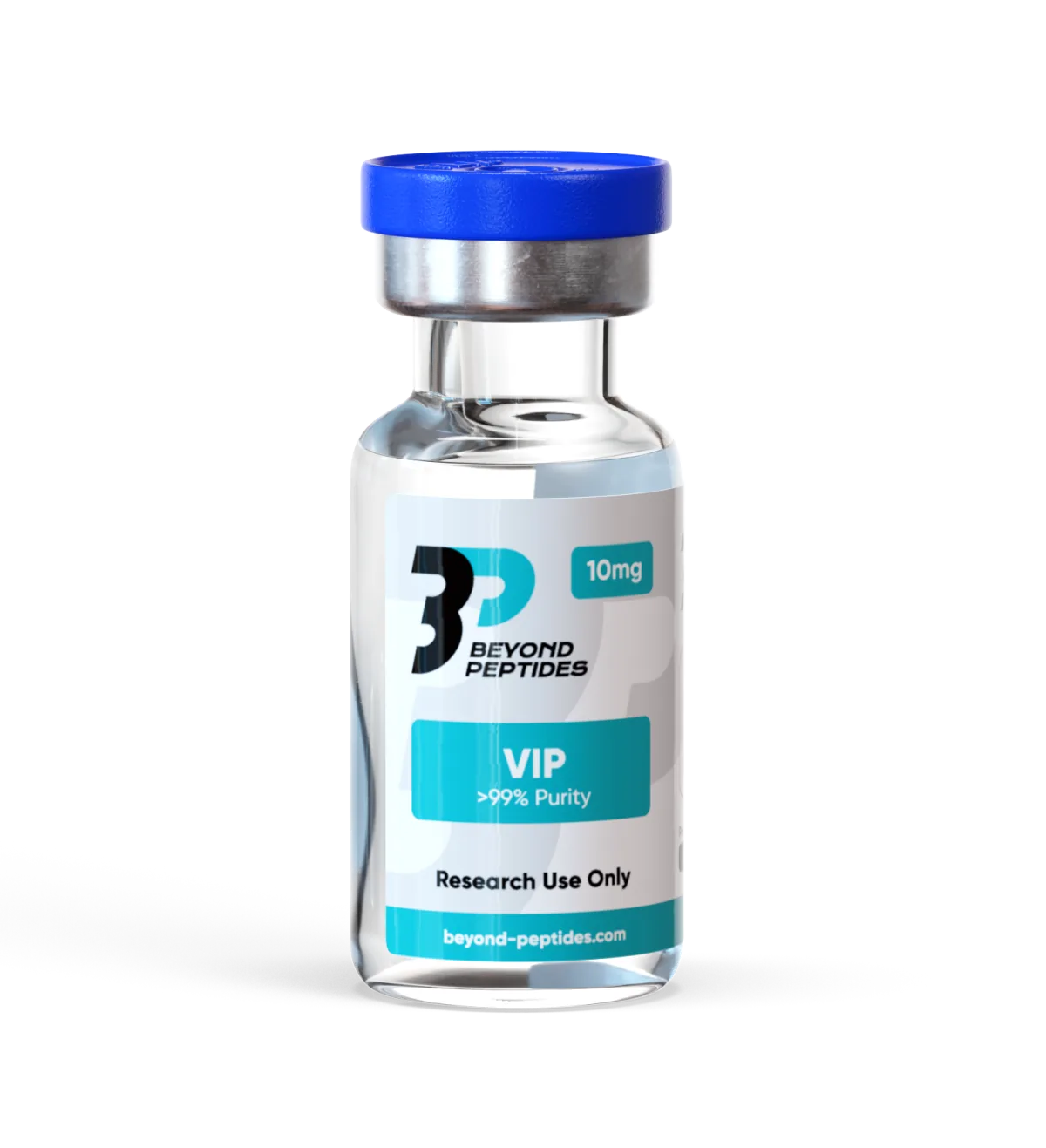
High-Purity Vasoactive Intestinal Peptide (VIP) for Sale | ≥99% Purity | 48-Hour Delivery Across EU & UK
VIP Peptide: The Master Neuropeptide at the Forefront of Immunomodulation & Neuroprotection Research
Buy VIP Peptide EU & UK, eupeptidelap.co.uk is proud to present VIP Peptide (Vasoactive Intestinal Peptide) , a premium research-grade 28-amino acid neuropeptide manufactured to the highest analytical standards. As a trusted peptide vendor uk and leading EU peptide supplier, we provide researchers across Europe with VIP peptide for sale that delivers exceptional purity, consistency, and documented quality for advanced studies in immunology, neuroscience, and gastrointestinal research. Buy VIP Peptide EU & UK
Vasoactive Intestinal Peptide (VIP) is a 28-amino acid neuropeptide belonging to the secretin/glucagon superfamily of peptide hormones, first isolated and characterised by Said and Mutt in 1970 . VIP is widely distributed throughout the central and peripheral nervous systems, with significant concentrations in the gastrointestinal tract, heart, lungs, thyroid, kidney, and immune tissues . It functions as a neurotransmitter, neuromodulator, and immunoregulatory molecule with pleiotropic effects that have made it one of the most extensively studied neuropeptides in modern research .
The amino acid sequence of VIP is His-Ser-Asp-Ala-Val-Phe-Thr-Asp-Asn-Tyr-Thr-Arg-Leu-Arg-Lys-Gln-Met-Ala-Val-Lys-Lys-Tyr-Leu-Asn-Ser-Ile-Leu-Asn-NH₂ , with a molecular weight of approximately 3.326 kDa . VIP exerts its biological effects primarily through two G protein-coupled receptors: VPAC1 and VPAC2, both of which bind VIP and the related peptide PACAP with equal affinity (Kd ≈ 1 nM) . Through these receptors, VIP activates adenylyl cyclase, leading to increased intracellular cAMP and downstream signalling cascades that influence a wide range of physiological processes .
For researchers seeking to buy peptide online EU for investigations into neuroimmune interactions, inflammatory pathways, gastrointestinal physiology, or neuroprotection, eupeptidelap.co.uk offers this premium research compound with comprehensive documentation, including Certificates of Analysis and batch-specific purity data. Whether your laboratory is based in London, Berlin, Paris, or anywhere in the European Union, our guaranteed 48 hour delivery peptide service ensures your research continues without interruption.
The Scientific Foundation of VIP Peptide Research
Discovery and Historical Significance
Vasoactive Intestinal Peptide was first discovered in the late 1960s when Dr. Sami I. Said and Dr. Viktor Mutt isolated a peptide from porcine duodenum that exhibited potent vasodilatory activity . The discovery was rooted in the earlier observation that intestinal extracts contained a “vasodepressor principle” that lowered blood pressure . Named for its initial vasoactive properties, VIP was soon identified throughout the central and peripheral nervous systems, establishing it as a widely distributed neuropeptide with diverse physiological roles .
Since its discovery, VIP has been the subject of thousands of published studies, with research spanning neuroendocrinology, immunology, gastroenterology, and cardiovascular medicine . Its evolutionary conservation across species—with at least 85% sequence similarity among mammals—underscores its fundamental biological importance .
Structure and Classification
VIP is a 28-amino acid peptide with the sequence His-Ser-Asp-Ala-Val-Phe-Thr-Asp-Asn-Tyr-Thr-Arg-Leu-Arg-Lys-Gln-Met-Ala-Val-Lys-Lys-Tyr-Leu-Asn-Ser-Ile-Leu-Asn-NH₂ . It belongs to the secretin/glucagon superfamily of peptide hormones, which also includes glucagon, GLP-1, GIP, secretin, and growth hormone-releasing hormone (GHRH) . The secondary structure of VIP is characterized by two β-turns containing the N-terminal eight amino acid residues, followed by two helices (residues 7–15 and 19–27) connected by a region of undefined structure that confers molecular flexibility .
VIP Receptors: VPAC1 and VPAC2
VIP exerts its biological effects through two G protein-coupled receptors, VPAC1 and VPAC2, both of which belong to class B (secretin receptor family) of GPCRs . These receptors bind VIP and the closely related peptide PACAP with equal affinity (Kd ≈ 1 nM) and signal primarily through activation of adenylyl cyclase, leading to increased intracellular cAMP .
| Receptor | Distribution | Primary Functions |
|---|---|---|
| VPAC1 | Constitutively expressed in lymphocytes, macrophages, monocytes, dendritic cells, microglia, mast cells, and intestinal epithelial cells | Immunomodulation, anti-inflammatory effects, T-cell differentiation, gut epithelial function |
| VPAC2 | Expressed in smooth muscle, vascular endothelium, suprachiasmatic nucleus (SCN), and inducible on immune cells following activation | Circadian rhythm regulation, smooth muscle relaxation, vasodilation, immune modulation |
VPAC1 is constitutively expressed on a wide range of immune cells, including CD4 and CD8 T cells, macrophages, monocytes, dendritic cells, microglia, and mast cells . In contrast, VPAC2 is expressed at low levels in resting immune cells but can be induced following stimulation by TLR2 and TLR4 ligands . The differential expression patterns of these receptors underlies VIP’s ability to exert context-dependent effects on immune function.
Biosynthesis and Processing
VIP is synthesized as a 170-amino acid precursor, prepro-VIP, which is cleaved by signal peptidase to form pro-VIP . Pro-VIP is then processed by prohormone convertases to a VIP precursor containing the internal cleavage-amidation site Gly–Lys–Arg (VIP–GKR) . The KR residues are cleaved by carboxypeptidase B-like enzymes, and the resulting VIP-G is metabolised by peptidyl-glycine alpha-amidating monooxygenase (PAM) to produce mature VIP with an amidated C-terminus . Prepro-VIP also contains the bioactive hormone peptide histidine methionine (PHM) in humans or peptide histidine isoleucine (PHI) in other mammals .
Key Research Applications
Immunomodulation and Anti-Inflammatory Research
VIP has emerged as one of the most extensively studied immunomodulatory neuropeptides in the research community . Its ability to regulate immune responses has been documented in hundreds of peer-reviewed studies, making it a valuable tool for investigating inflammatory pathways .
Mechanism: VIP binds to VPAC1 receptors on immune cells, leading to increased intracellular cAMP and activation of protein kinase A (PKA). This signalling cascade inhibits the production of pro-inflammatory cytokines, including TNF-α, IL-1β, IL-6, and IL-12, while promoting the production of anti-inflammatory cytokines such as IL-10 . VIP also favours T-cell differentiation toward Th2 and regulatory T-cell (Treg) phenotypes, reducing Th1 and Th17 responses .
Research Applications: VIP is used in studies investigating:
-
Autoimmune Disease Models: VIP has been shown to reduce the severity of experimental autoimmune encephalomyelitis (EAE), a model of multiple sclerosis
-
Inflammatory Bowel Disease: VIP modulates intestinal inflammation through effects on epithelial barrier function and immune cell activation
-
Rheumatoid Arthritis: Reduced VPAC1 expression in immune cells of rheumatoid arthritis patients correlates with disease severity
-
Neuroinflammation: VIP attenuates microglial activation and reduces expression of pro-inflammatory mediators such as iNOS, IL-1β, and IL-6 in LPS-stimulated microglia
Neuroprotection and Neurodegenerative Disease Research
VIP exhibits potent neuroprotective effects that have attracted significant research interest in models of neurodegenerative disease . Studies demonstrate that VIP protects neurons against toxin-induced degeneration, reduces oxidative stress, and promotes neuronal survival .
Mechanism: VIP acts through VPAC receptors on glial cells, promoting the release of neurotrophic factors and reducing neuroinflammation . VIP also directly modulates microglial activity, shifting activated microglia toward neuroprotective phenotypes .
Key Findings:
-
VIP-treated microglia conditioned media protects neuronal cells against toxin-induced degeneration
-
VIP reduces amyloid-beta toxicity in Alzheimer’s disease models
-
VIP promotes neuronal survival and neurite outgrowth in models of Parkinson’s disease
-
VIP activates antioxidant defence mechanisms and reduces reactive oxygen species
Gastrointestinal Physiology Research
Given its original discovery in the duodenum, VIP has long been studied for its roles in gastrointestinal function. VIP is a key regulator of intestinal ion secretion, gut motility, nutrient absorption, and mucosal immunity .
Physiological Functions:
-
Ion Secretion: VIP stimulates electrogenic anion secretion in the small and large intestine via VPAC1 receptors on epithelial cells
-
Gut Motility: VIP acts as a non-adrenergic, non-cholinergic (NANC) neurotransmitter that relaxes smooth muscle, contributing to peristalsis
-
Barrier Function: VIP modulates tight junction protein expression and maintains intestinal epithelial barrier integrity
-
Mucosal Immunity: VIP regulates immune responses in the gut-associated lymphoid tissue (GALT)
Research Models: VIP knockout mice exhibit increased intestinal permeability, reduced mucus production, altered crypt cell proliferation, and increased susceptibility to colitis, highlighting VIP’s role in maintaining gut homeostasis .
Cardiovascular Research
VIP was first identified for its potent vasodilatory effects, and cardiovascular research remains a significant area of study. On a molar basis, VIP has been reported to be 50–100 times more potent than acetylcholine as a vasodilator .
Mechanism: VIP acts through VPAC2 receptors on vascular smooth muscle and endothelium, activating adenylyl cyclase and increasing cAMP. This leads to smooth muscle relaxation and vasodilation. VIP also has positive inotropic effects on cardiac muscle and can increase heart rate .
Research Applications:
-
Vascular Function Studies: VIP is used to investigate endothelium-dependent and independent vasodilation pathways
-
Cardiac Physiology: VIP’s effects on myocardial contractility and heart rate are studied in cardiac research models
-
Pulmonary Hypertension: VIP inhalation has been shown to reduce pulmonary arterial pressure in pre-clinical models
Circadian Rhythm Research
VIP is expressed in the suprachiasmatic nucleus (SCN) of the hypothalamus, the master circadian clock, and plays a critical role in synchronising circadian rhythms . VIP acts through VPAC2 receptors on SCN neurons to maintain rhythmicity and coordinate daily cycles of activity and physiology.
Key Research Areas:
-
SCN Synchrony: VIP is essential for maintaining phase synchrony among SCN neurons
-
Behavioural Rhythms: VIP knockout mice exhibit disrupted circadian rhythms in locomotor activity
-
Sleep-Wake Cycles: VIP signalling influences sleep architecture and arousal states
Cancer Research
Recent studies have identified VIP and its receptors as potential targets in cancer research . VIP has been shown to influence tumour growth, immune evasion, and angiogenesis in various cancer models .
Key Findings:
-
VIP receptor antagonists have demonstrated anti-leukemia activity by enhancing T-cell activation and promoting specific anti-leukemia responses
-
VPAC2 receptor signalling promotes growth and immunosuppression in pancreatic cancer
-
VIP is expressed in various tumour types, including breast, lung, and colorectal cancers
Quality Assurance: Setting the Standard for Research Compounds
Manufacturing Excellence
eupeptidelap.co.uk sources VIP Peptide from certified GMP facilities with rigorous quality control protocols:
-
HPLC Purity Analysis: ≥99% purity verified by high-performance liquid chromatography
-
Mass Spectrometry Verification: Molecular weight confirmation via LC-HRMS
-
Batch-Specific Certificates of Analysis: Complete documentation for each production run
-
Sterile Manufacturing: Lyophilised with no additives; sterile filtered
-
Research-Use Only (RUO) Labelling: Full compliance with research compound regulations
Chemical and Product Specifications
| Specification | Detail |
|---|---|
| Product Name | VIP Peptide (Vasoactive Intestinal Peptide) |
| CAS Number | 40077-57-4 |
| Molecular Formula | C₁₄₇H₂₃₈N₄₄O₄₂S |
| Molecular Weight | ~3,326 Da |
| Amino Acid Sequence | His-Ser-Asp-Ala-Val-Phe-Thr-Asp-Asn-Tyr-Thr-Arg-Leu-Arg-Lys-Gln-Met-Ala-Val-Lys-Lys-Tyr-Leu-Asn-Ser-Ile-Leu-Asn-NH₂ |
| Purity | ≥99% (HPLC verified) |
| Appearance | White to off-white lyophilised powder |
| Form | Lyophilised powder |
| Solubility | Soluble in sterile water, 1% acetic acid, or bacteriostatic water |
| Target Receptors | VPAC1, VPAC2 (Class B GPCRs) |
| Storage (Lyophilised) | -20°C; protect from light and moisture |
| Storage (Reconstituted) | 2-8°C for short-term; aliquot and store at -20°C for longer storage |
| Shelf Life | 24 months from date of manufacture |
| Intended Use | Research and laboratory use only |
| Documentation | Certificate of Analysis provided with each batch |
Stability and Handling Guidelines
Lyophilised Powder Storage: Store lyophilised VIP powder at -20°C in a dry, dark environment, protected from light and moisture . Under proper storage conditions, the powder maintains stability for up to 24 months from the date of manufacture.
Reconstitution Protocol:
-
Allow vial and solvent to reach ambient temperature before opening to prevent condensation
-
Reconstitute using sterile water, 1% acetic acid, or bacteriostatic water according to research protocol
-
Inject solvent slowly down the inside wall of the vial to minimise foaming
-
Gently swirl or roll the vial until fully dissolved—do not shake vigorously
-
Label the vial with the date of reconstitution
-
Refrigerate immediately at 2-8°C
Reconstituted Solution Storage: Store reconstituted VIP at 2-8°C for short-term use. For longer-term storage, aliquot into single-use portions and store at -20°C. For extended stability, the addition of a carrier protein (0.1% BSA, 5% HSA, or 10% FBS) is recommended . Avoid repeated freeze-thaw cycles.
Protection from Light and Moisture:
-
Store in original packaging protected from light
-
Keep vials tightly sealed when not in use
-
Allow refrigerated vials to reach room temperature before opening to prevent condensation
Key Benefits
-
Premium Quality Manufacturing: GMP-certified production, ≥99% HPLC-verified purity with lot-specific COAs
-
Well-Characterised Peptide: Over 50 years of published research with extensive peer-reviewed literature
-
Dual Receptor Targeting: Activates both VPAC1 and VPAC2 receptors for comprehensive pathway studies
-
Immunomodulation Research: Inhibits pro-inflammatory cytokines (TNF-α, IL-1β, IL-6) and promotes anti-inflammatory IL-10
-
T-Cell Differentiation Studies: Favours Th2 and Treg phenotypes while suppressing Th1 and Th17 responses
-
Neuroprotection Research: Protects neurons against toxin-induced degeneration and reduces neuroinflammation
-
Gastrointestinal Research: Regulates ion secretion, gut motility, barrier function, and mucosal immunity
-
Cardiovascular Studies: Potent vasodilator (50-100× more potent than acetylcholine) with positive inotropic effects
-
Circadian Rhythm Research: Essential for SCN synchrony and behavioural rhythm regulation
-
Cancer Research: Investigated for anti-leukemia activity and immune modulation in tumour models
-
Microglial Modulation: Attenuates LPS-induced microglial activation and pro-inflammatory mediator expression
-
Evolutionarily Conserved: At least 85% sequence similarity across mammals, indicating fundamental biological importance
-
Broad Tissue Distribution: Expressed in CNS, PNS, gastrointestinal tract, cardiovascular system, and immune tissues
-
High Potency: Active at picomolar to nanomolar concentrations through high-affinity receptor binding
-
Comprehensive Documentation: Certificates of Analysis with batch-specific purity data
-
48-Hour EU & UK Delivery: Rapid shipping to research facilities across Europe
-
Batch Consistency: Rigorous quality control ensures lot-to-lot reproducibility
-
EU Sourced: Available from within the European Union
Frequently Asked Questions
Q: What is VIP Peptide and how does it work?
A: VIP (Vasoactive Intestinal Peptide) is a 28-amino acid neuropeptide belonging to the secretin/glucagon superfamily . It acts primarily through two G protein-coupled receptors, VPAC1 and VPAC2, which signal through adenylyl cyclase and cAMP . VIP has pleiotropic effects as a neurotransmitter, immunomodulator, vasodilator, and secretagogue .
Q: What purity level can I expect when I buy VIP Peptide from eupeptidelap.co.uk?
A: All VIP Peptide from eupeptidelap.co.uk is tested to ≥99% purity by HPLC, with batch-specific Certificates of Analysis provided with every order .
Q: What is the amino acid sequence and molecular weight of VIP?
A: VIP has the sequence His-Ser-Asp-Ala-Val-Phe-Thr-Asp-Asn-Tyr-Thr-Arg-Leu-Arg-Lys-Gln-Met-Ala-Val-Lys-Lys-Tyr-Leu-Asn-Ser-Ile-Leu-Asn-NH₂ and a molecular weight of approximately 3,326 Da .
Q: What research areas commonly use VIP Peptide?
A: VIP is widely used in immunomodulation and anti-inflammatory research, neuroprotection and neurodegenerative disease studies, gastrointestinal physiology research, cardiovascular research, circadian rhythm studies, and cancer research .
Q: How should I store VIP Peptide for long-term stability?
A: Store lyophilised VIP powder at -20°C, protected from light and moisture . After reconstitution, store at 2-8°C for short-term use. For longer-term storage, aliquot into single-use portions and store at -20°C. The addition of a carrier protein (0.1% BSA) is recommended for extended storage .
Q: What is the recommended reconstitution protocol for VIP Peptide?
A: Reconstitute using sterile water, 1% acetic acid, or bacteriostatic water . Allow vial and solvent to reach ambient temperature before opening, inject solvent slowly down the vial wall, and gently swirl until dissolved—do not shake vigorously .
Q: What are the primary receptors for VIP?
A: VIP binds with high affinity to two G protein-coupled receptors: VPAC1 and VPAC2 (Kd ≈ 1 nM). VPAC1 is constitutively expressed on immune cells, while VPAC2 is expressed on smooth muscle and inducible on immune cells .
Q: Does VIP have neuroprotective properties?
A: Yes. VIP exhibits potent neuroprotective effects, protecting neurons against toxin-induced degeneration, reducing oxidative stress, and promoting neuronal survival . VIP also modulates microglial activation, reducing pro-inflammatory mediator expression and shifting microglia toward neuroprotective phenotypes. . . . . . . . . . . . . . . . . . . . . . . . . . . . . . . . . . . . . . . .
Q: Do you ship VIP Peptide to EU countries?
A: Yes. As a dedicated EU peptide supplier, we ship VIP Peptide to all European Union member states with our guaranteed 48 hour delivery peptide service. Our EU fulfilment centre ensures rapid delivery without customs delays. All shipments use protective packaging to maintain compound integrity during transit.
Q: What documentation do you provide with VIP Peptide orders?
A: Every order includes a Certificate of Analysis (COA) with batch-specific purity data . Additional documentation, including HPLC chromatograms and mass spectrometry data, is available upon request.
Q: Is VIP Peptide stable in solution?
A: VIP is stable when stored properly. Reconstituted solutions should be used within a short timeframe (2-7 days at 4°C) or aliquoted and frozen at -20°C for longer storage. The addition of a carrier protein (0.1% BSA) improves stability .
Q: What is the biological activity of VIP?
A: VIP activates adenylyl cyclase in target cells through VPAC receptor binding, increasing intracellular cAMP . This signalling cascade mediates VIP’s effects on immune modulation (reducing pro-inflammatory cytokines), vasodilation (relaxing vascular smooth muscle), and neuroprotection (promoting neuronal survival) .
Q: Do you offer bulk quantities of VIP Peptide for institutional research?
A: Yes. We accommodate bulk orders for research institutions. Contact our team at sales@eupeptidelap.co.uk for volume pricing, custom requirements, and supply agreements for ongoing research programs. ...........................................
Advance Your Research with VIP Peptide
eupeptidelap.co.uk is your trusted source for VIP Peptide, the premium choice for researchers investigating immunomodulation, neuroprotection, gastrointestinal physiology, and cardiovascular signalling. With over five decades of published research establishing VIP as a master regulator of neuroimmune interactions, this 28-amino acid neuropeptide represents an essential tool for exploring the complex biology of the VPAC receptor system .
Whether you are exploring inflammatory pathways, designing neuroprotection studies, investigating gastrointestinal function, or researching circadian rhythms, our rigorously tested compound provides the quality and consistency your work demands.
Order today and experience the eupeptidelap.co.uk difference – premium quality, rapid 48-hour delivery across the EU and UK, and expert support for the European research community.